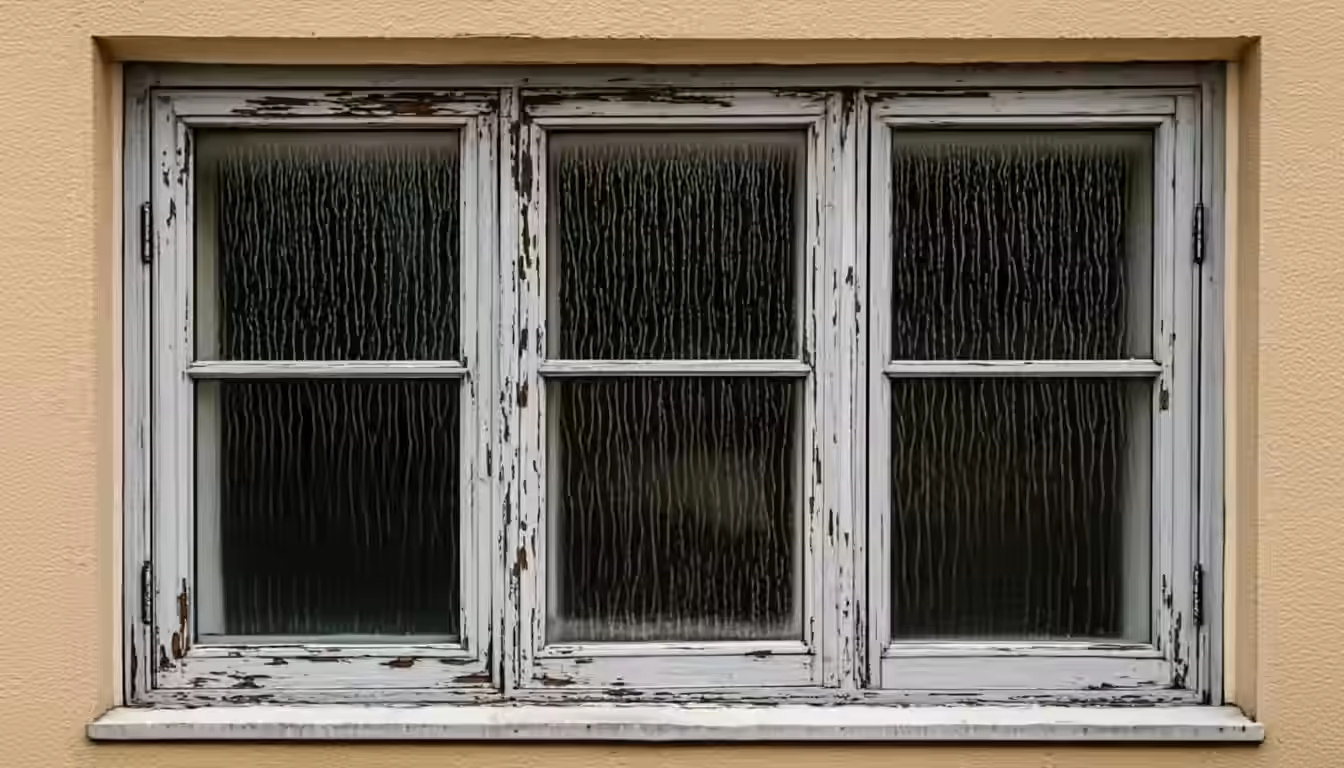
The Honest Answer Up Front
Two numbers do most of the work on a window energy label, and they measure opposite things. U-factor is the insulation number: how fast the assembly loses heat, where lower is better and every decimal costs or saves real money through a BC winter. Solar Heat Gain Coefficient, SHGC, is the free-heat number: the fraction of sunlight a window lets in as warmth, where higher is not better or worse, just a choice you make per wall.
In a heating-dominated climate like coastal BC, the default strategy is simple: push U-factor as low as the budget allows, then treat SHGC as an orientation decision. A south-facing living room can harvest real winter warmth with a higher SHGC, while a west-facing bedroom that cooks through July afternoons wants a lower number and shading. The mistake is buying one number for the whole house, because the sun does not treat all four walls the same.
The label itself is more readable than most homeowners expect, and the numbers on it describe the whole assembled window, glass, spacer and frame, not just the pretty centre of the glass. Our windows and doors estimators quote from the same labels this guide teaches you to read, which is the honest way to compare bids that do not otherwise compare.
U-factor is the heat you keep, SHGC is the heat you invite. In BC, buy the first low and choose the second per wall.
0 jobs since 2010
Plumbing, heating and window jobs completed by our Red Seal team across Metro Vancouver.
0 star rated, 26 reviews
Homeowners rating the estimates flat, the schedules honest and the installs exactly as quoted.
0 in the field
A 2010 start in Vancouver trades means every old-house wall condition is a familiar one.
0 workmanship warranty
Glass and hardware carry manufacturer coverage, and our own labour is guaranteed for two full years.
U-Factor: The Insulation Number
U-factor is the rate of heat transfer through the whole window assembly. Where an R-value describes resistance, a U-factor describes flow, so lower is better, and the scale is unforgiving: each step down represents glass, coatings and cavities engineered to slow heat that would otherwise leave the room in a straight line. Canada labels in metric watts per square metre per kelvin, while the American NFRC label uses imperial BTUs, and the numbers differ by roughly a factor of six, which is why a 1.4 metric and a 0.25 imperial window can be the same product.
The ladder of glazing generations makes the number concrete. These are typical whole-window ranges, honest rather than exact, and the frame choice in Chapter 6 moves every row:
| Glazing generation | Typical whole-window U-factor (imperial) | What it feels like in January |
|---|---|---|
| Single pane, aluminum frame | Around 1.0 | Cold draft zone near the glass, daily winter condensation |
| Double pane, clear, metal spacer | Around 0.5 | Noticeably better, still fogs at edges on cold nights |
| Double pane, low-E coating, argon fill | 0.25 to 0.30 | Comfortable to sit beside, rare condensation |
| Triple pane, two low-E surfaces, double argon cavity | 0.15 to 0.20 | Glass that feels cool rather than cold, quiet |
Reading the ladder honestly: the biggest single jump is old single pane to any modern double, and each later rung costs more and returns less. That is the value physics of windows in one table, and it is why we spend a whole separate guide on the double-versus-triple question before anyone pays for the third pane.
SHGC: The Solar Heat Gain Number
Solar Heat Gain Coefficient runs from 0 to 1 and describes the fraction of incoming solar energy that passes through the window as heat. A clear double pane with no low-E coating might sit near 0.55, letting more than half the sun energy through, while spectrally selective low-E coatings can pull the number down near 0.25 while barely darkening the view. Neither number is a virtue on its own; each is a tool for a different wall.
BC is a two-season solar story. Through the heating season, from October to April, the sun is low and welcome, and a south-facing window with a higher SHGC converts that light into free warmth on the exact days you are paying to heat the room. Through summer, the sun climbs high and lingers, and the same number that was a gift in January turns a west-facing bedroom into an oven through the late afternoon of a heat dome week.
The coating that lowers SHGC is tuned to block the infrared and ultraviolet parts of sunlight more than the visible part, which is why low SHGC glass looks nearly the same but feels different in the beam. That subtlety is worth knowing at showrooms: the view gives you almost no read on the number, and two nearly identical windows can differ by a third in solar gain.
Reading the Label, Line by Line
A window quote is only as comparable as its label, and the label is a designed document with a reading order. This is the sequence our estimators teach on the first measure visit, and it takes about a minute per product.
Find the whole-window rating, not the glass rating
The honest numbers cover the assembled unit: glass, spacer, frame and sash together. Centre-of-glass values are always flattering, and a quote built on them is quoting a different product than the one you will live with.
Read the U-factor first and the standard beside it
Confirm whether the number is metric, in watts per square metre per kelvin, or imperial, in BTU per hour per square foot per degree Fahrenheit, before comparing anything. A factor of roughly six separates the scales, and misread quotes are the most common energy-label mistake we see on kitchen tables.
Read the SHGC next, and ask which coating it describes
Two windows with identical U-factors can differ sharply in solar gain because the low-E coating is doing different work. Ask which wall the product was specified for, and be suspicious of one number quoted for an entire house.
Look for the Energy Rating if it is a Canadian label
The CSA A440.2 Energy Rating rolls U-factor, solar gain and airtightness into a single higher-is-better score. It is a useful shortcut for a whole-house average, and a poor substitute for the orientation decisions in Chapter 7.
Check the airtightness rating
The tightest classes move real air, and a beautiful U-factor on a leaky sash is a race car with the windows down. Canadian labels grade this explicitly, and it is the number that silent winter drafts come from.
Ask for the spec sheet, and keep it with the quote
The label summarizes, the spec sheet commits. Permutation codes, glazing cavity widths, coating placement and spacer type all live there, and it is the document that makes a warranty conversation or a resale inspection easy years later.
A quote without a label is a price, not a specification. Any crew reluctant to put the performance numbers on the table beside the dollars is answering a different question than the one you asked.
ER: The Canadian All-in-One Number
Canada long ago decided that two numbers were too many for a national energy label, so the CSA A440.2 Energy Rating combines them. The ER folds U-factor, solar gain and airtightness into one score where higher is generally better, and it is the number many BC utility programs and code conversations reference. It is a genuinely useful ranking tool for comparing like products across a whole order.
Its honesty limit is orientation. The ER credits solar gain at an assumed average, which rewards a sunny south wall correctly and over-rewards a shaded north wall that never sees the winter sun. A house that buys strictly by highest ER ends up specifying warm-gain glass on walls that never collect it. The working rule we use on estimates: let ER rank the shortlist, then let the compass and the shading make the final call per elevation.
The ER also hides frame size. Two windows with the same glazing and different frame proportions carry the same ER on paper while performing differently in the wall, because glass-to-frame ratio changes the real heat loss. It is a good number, and it is one number, which is exactly its limitation and the reason Chapters 2 and 3 exist.
How the Frame Changes the Numbers
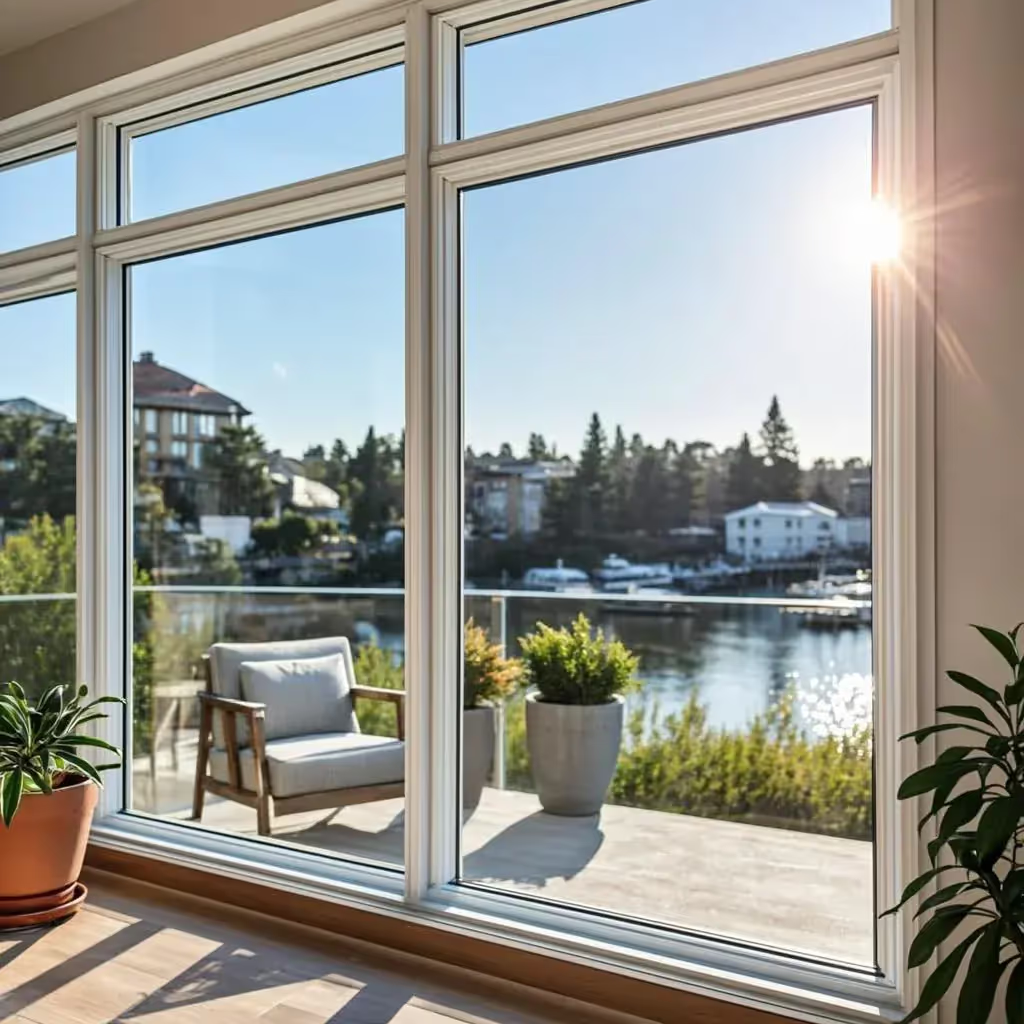
A window is a frame problem wearing a glass costume. The frame carries the sash, holds the hardware, seals against the rough opening and, on many products, covers a meaningful fraction of the opening area. Since the perimeter of any assembly is its weakest thermal zone, the frame material moves the whole-window U-factor more than most buyers expect, and two windows with identical glass can land in different performance rows because of what surrounds the glass.
| Frame material | Thermal character | What it does to the label |
|---|---|---|
| Vinyl, multi-chamber with reinforcement | Good insulation, forgiving in rain, the BC default | U-factor gains from the chambers, honest mid price band |
| Fibreglass | Strong, dimensionally stable, slim profiles possible | Holds larger triple units without bulky profiles |
| Aluminum, thermal break | Strong and slim, the break is essential in BC | Still a modest thermal penalty at the perimeter |
| Aluminum, no break | A heat highway to the outdoors | The condensation chapter of any old-stock guide |
| Wood and clad wood | Warm and traditional, maintenance is the trade | Excellent U-factor, highest care requirement |
Two small parts punch far above their size. The spacer bar between the panes is a metal or warm-edge composite highway around the glazing perimeter, and upgrading it visibly improves the edge-of-glass temperature, which is exactly where condensation starts. And the weatherstripping is the airtightness line item: compression seals on casements outperform sliding seals, which is one reason operable style belongs in the energy conversation and not just the style one.
Matching Numbers to Room Orientation
The compass is the free part of window specification. The same sun behaves differently on each wall, and the numbers that reward a south living room punish a west bedroom. This is the table to bring to a measure visit, because it converts one house-wide guess into four wall-specific decisions:
| Wall orientation | The sun it actually gets | The honest spec strategy |
|---|---|---|
| South | Low winter sun deep into the room, high summer sun largely bounced by overhangs | Favour a higher SHGC for winter gain, lowest practical U-factor, classic passive solar wall |
| North | No direct winter sun, diffuse light year round | SHGC barely matters, spend the whole budget on U-factor and airtightness |
| East | Gentle morning sun, welcome in a BC winter, harmless in summer | Balanced numbers, mid SHGC, comfortable defaults |
| West | Low late-afternoon sun, the summer overheat wall during heat events | Lower SHGC and a shading plan, exterior shade beats glass coatings on the worst days |
The two walls that reward the most thought are south and west, and they pull in opposite directions. A south wall can be your heating system's quiet assistant through the heating season, while a west wall is the one that decides whether August bedrooms are sleepable, and the shading chapter next is where that decision really lives.
Heat Domes Changed the SHGC Conversation
Before the 2021 heat dome, the standard Metro Vancouver advice was simple: let the sun in, winters are long and mild and the more free gain the better. After it, west-facing glass earned a reputation, and bedrooms that had been fine for decades became the rooms families remember. A low SHGC on a west elevation now reads as summer insurance, and the question changed from whether to how much.
The honest engineering still favours balance, because the same coating that saves August buys nothing in January on a wall that no longer gets useful winter sun. The layered answer, in order of effectiveness: exterior shading first, because awnings, deciduous trees and operable shutters block summer sun while admitting the low winter light that lower-angle geometry delivers; window SHGC second, tuned to how much of the overheat problem shading cannot reach; and interior blinds last, which manage glare well and heat only modestly.
There is also a comfort story in the coating itself. Low SHGC glass cuts the radiant beam that makes a sunny reading chair punishing in July, and cutting ultraviolet protects floors and furniture while doing it. If a heat dome week is the only summer problem the room has, the shading-plus-glass conversation is a short one, and it is worth having before the next July, not during it.
Shade the wall in summer with things that move or grow, and buy the glass for the winter. The best window spec is the one that changes with the seasons without your help.
Code, Rebates and Paperwork
The BC Building Code sets minimum energy performance for new windows in permitted work, and the numbers ratchet with each edition, so a window that was code-compliant a decade ago may not be quotable today. The practical consequence for a replacement project is that your installer tracks the current edition and the municipal amendments, and the performance line on the permit drawings is the label line you just learned to read. Our crews pull the numbers from the same spec sheets at permit time, which keeps the code conversation boring, which is its correct state.
Rebates are the other paperwork lane. Utility and CleanBC window programs in BC change windows, dollar amounts and eligibility rules year to year, and when one is live for your project it may apply — we check eligibility and handle paperwork. The programs worth stacking live in our CleanBC rebates guide, and the financing page covers the monthly-payment side, with approved-credit financing from 7.99 percent available on replacement packages.
One paperwork habit pays for itself: keep the labels and spec sheets with your receipts. Every future rebate, warranty, resale inspection and renovation conversation goes faster with the numbers on file, and the label you photograph at install time is the same label this guide taught you to read.
What Better Numbers Cost
Performance tiers cost real money, and the honest way to budget is by unit type and by wall. Typical installed replacement pricing runs $650 to $950 for picture units, $800 to $1,400 for casements, $1,200 to $3,500 for sliders, and $3,200 to $6,500 for bay and bow assemblies, with entry doors at $2,400 to $4,800 and patio doors at $3,200 to $6,500. A full-home package lands between $12,000 and $30,000 depending on opening count, floor access and the performance tier you choose per wall.
| Where the budget goes | What moves the number |
|---|---|
| Glazing tier | Single to double is the big jump, double low-E argon is the BC sweet spot, triple buys comfort at a premium |
| Frame quality | Chambers, reinforcement and weatherstripping design move U-factor and airtightness together |
| Operable style | Casements seal by compression and earn their price band on windy walls, sliders trade a little tightness for wide openings |
| Per-wall spec mix | The compass strategy: highest performance on north and windward, solar-tuned on south and west |
| Install quality | The numbers only exist in a wall that is flashed, shimmed and sealed correctly, which is a whole final chapter of any honest quote |
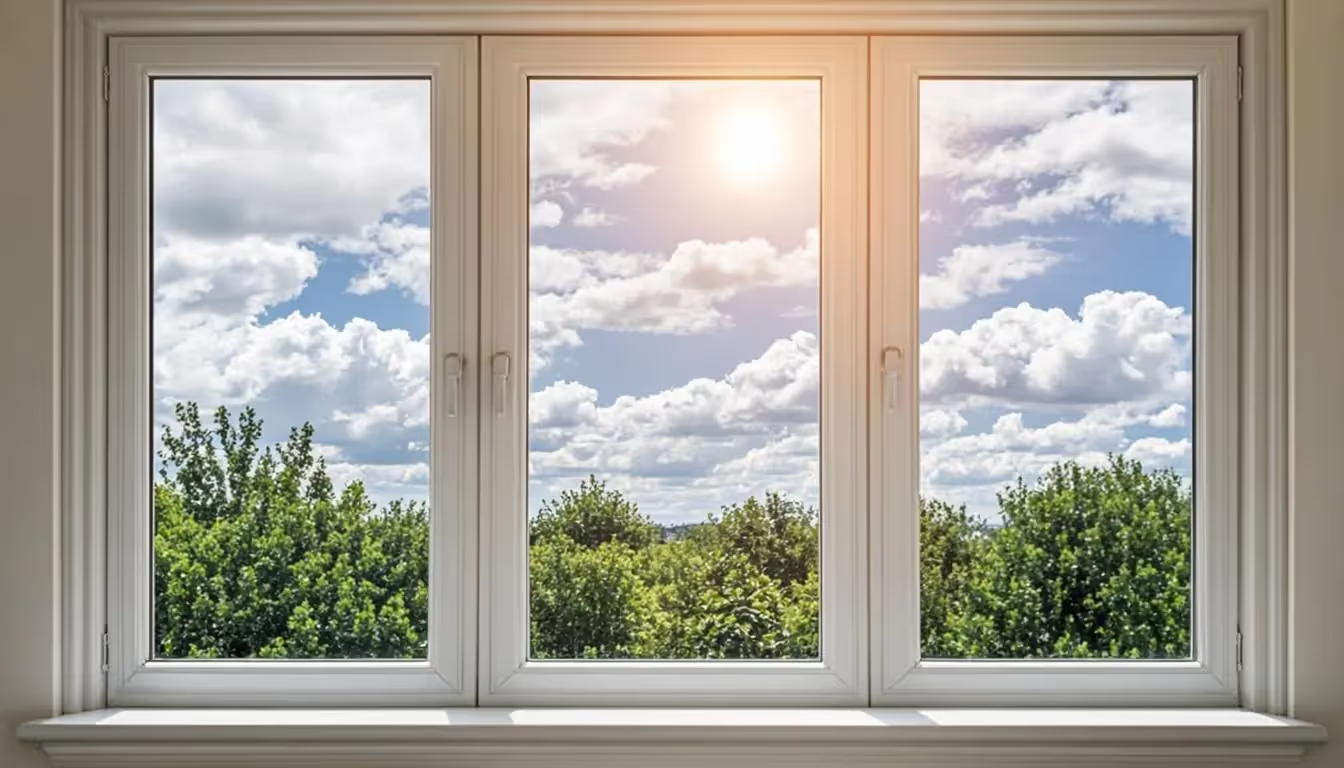
The sequencing logic that saves the most per dollar: fix the worst walls first, prioritize the rooms you actually occupy, and use the compass table instead of one house-wide spec. The full decision framework, from measuring to permits, is in our window replacement guide for Vancouver homes.
Want Your Quote in Label Numbers?
Free in-home measure, per-wall spec strategy, and flat-rate written pricing from $650 to $950 for picture units. Call 604-615-2212 or request a visit.
City Notes Across Metro Vancouver
The label is the same everywhere, and the sun and stock are not. These are the orientation and housing patterns each city brings to a window specification, and the reason per-wall specs beat house-wide ones.
Our Richmond windows and doors crews see the pattern in its purest form: flat river-delta lots with long unshaded west walls, where the SHGC conversation earns its keep every July.
Vancouver
Character homes with original single pane and aluminum frames: the wettest glass in the region, and the clearest humidity signals.
Richmond
Slab-on-grade homes and river-level air: humidity runs high and window glass is the first gauge.
Burnaby
Post-war bungalows and half-storey additions where upstairs bedrooms fog up first every October.
Surrey
Mixed stock from 1970s sliders to new builds: new construction carries its own first-winter moisture story.
North Vancouver
Shaded north-slope lots under the rain forest canopy: the least solar gain and the coldest glass.
Delta
Boundary Bay exposure: mild but damp, with humidity rarely leaving the condensation zone.
The Cheat Sheet
Two numbers and a compass. The whole label story in one dark table.
| Decision | The honest call |
|---|---|
| Choosing U-factor | Lower is better, buy the rung your wall and budget justify, and always compare whole-window numbers on the same scale |
| Choosing SHGC | Higher on sun-fed south walls, lower on west overheat walls, ignored on north walls |
| Reading a quote | Whole-window label beside the price, spec sheet attached, airtightness grade visible |
| Using ER | Let the Energy Rating rank the shortlist, then let orientation make the final call |
| Heat dome protection | Exterior shading first, lower SHGC second, interior blinds last |
| Paperwork | Photograph labels at install, keep spec sheets with receipts, let the rebate and permit conversations be boring |
| Budgeting | Picture units $650 to $950, casements $800 to $1,400, whole-home packages $12,000 to $30,000, tiered per wall |
Compare U-factor like insulation and SHGC like a seat at the table: the first is what you keep, the second is who you invited, and the compass decides which wall is hosting.
Frequently Asked Questions
Services From This Guide
Per-wall specification with whole-window labels on every quote, picture windows from $650 to $950, casements from $800 to $1,400 and full-home packages from $12,000 to $30,000, flat-rate and written, backed by our 2-year workmanship warranty.
Window replacement
Whole-window labels on every quote, picture units from $650 to $950 and full-home packages from $12,000 to $30,000.
Richmond window specs
Long unshaded west walls and river-level sun: the SHGC conversation in its purest form, specified per wall.
Burnaby windows and doors
Post-war bungalow elevations and uphill north walls, measured and specified with the compass.
Financing and rebates
Approved-credit financing from 7.99 percent on replacement packages, with rebate eligibility checked and filed.
/div>Related Guides
Window Replacement in Vancouver
The full buying guide: measuring, permits, pricing bands and the sequencing logic for old-stock homes.
RebatesCleanBC Rebates Guide
The current stack of BC efficiency programs, and the paperwork order that captures them.
EfficiencyEnergy Efficient Upgrades in BC
Where windows sit in the whole-house envelope plan, and what to do first.
/div>
Red Seal certified, licensed gas fitters (BC-PL-2019-4421), $2M insured and 15-plus years in the field, with more than 12,000 jobs completed across Metro Vancouver since 2010 and a 5.0-star rating across 26 Google reviews. We wrote this guide because window energy labels are the most quoted and least read documents in the renovation world, and the two numbers that matter take about a minute to learn. The label-reading sequence and the per-wall strategy are what our estimators use on every measure visit, and the best window decision you can make is an informed one, whichever way it lands. To book instead of DIY, see window & door service in Delta — same-day across the city.
More about our team →Want Your Window Quote in Real Numbers?
Book a free in-home measure with a Red Seal estimator. You get the whole-window performance numbers beside the price, a per-wall strategy instead of a house-wide guess, and financing from 7.99 percent with approved credit if the package wins. Zero obligation, quotes on most calls within days. If you would rather hand this to a pro, our window & door services pages cover Metro Vancouver.
Comparing quotes you cannot line up?
We quote from the same whole-window labels this guide teaches you to read, so bids compare the way numbers should. Free measures are usually booked within days in Vancouver, Burnaby and Surrey.
Call 604-615-2212 WhatsApp Us