The Honest Answer Up Front
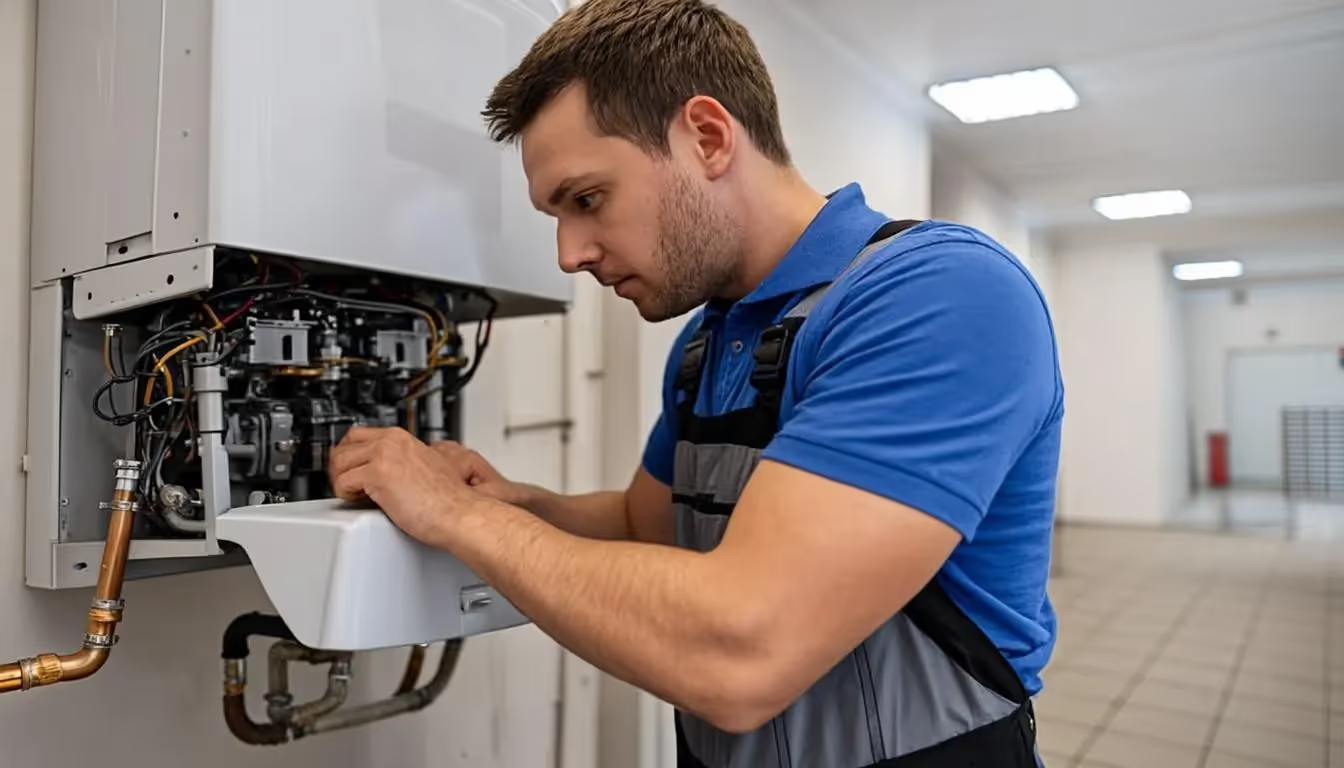
Winter furnace preparation in British Columbia is short, cheap and boring, which is exactly why so many families skip it and then meet us in January. Here is the honest version we give customers at the kitchen table: most no-heat emergencies in Metro Vancouver are not dramatic equipment failures, they are the ordinary consequences of a machine that sat idle from April to October being asked to work on the first genuinely cold night of the season. One Saturday hour of your own checks, plus a $129 professional tune-up booked in October, removes the majority of the failure paths that strand people during outflow weeks.
The BC calendar makes this predictable. Our furnaces sleep for roughly six months, wake up in mid-October, work modestly through November and December, then face their real test during arctic outflow events when temperatures drop from rainy-and-8 to minus 10 and colder inside a day or two. The failure wave arrives on cue twice a year: the first cold week of November, when every neglected furnace in the region ignites for the first time at once, and the first outflow week of January, when frost, old filters and tired parts collect their bills. Everything in this guide is scheduled against that calendar, and none of it takes longer than an afternoon.
A furnace tune-up booked in October costs $129 and takes about ninety minutes. The same furnace, ignored until a January lockout, needs a $89 diagnostic, a repair that typically lands between $180 and $650, and often a $150 flat after-hours premium for the privilege of meeting us at midnight. October is the cheapest month of your heating year.
0 jobs since 2010
Heating, cooling and plumbing work by our Red Seal team across Metro Vancouver and the Fraser Valley.
0 star rated
From 26 verified Google reviews, earned one honest diagnostic at a time.
0 average response
On 24/7 emergency calls, with flat after-hours pricing posted before we roll.
0 for a full tune-up
The professional half of October furnace prep, combustion analysis included.
What a BC Winter Actually Does to a Furnace
Furnace advice written for Saskatchewan or Ontario winters barely applies here. A Metro Vancouver furnace runs fewer heating hours than almost anywhere in Canada, but the way it runs, six silent months followed by sudden demand, creates a failure pattern that cold-climate provinces simply do not see. Understanding the four local factors below tells you why the checklist in Chapter 3 is built the way it is.
First, the long idle. Between April and October the burners never fire, dust cures onto the igniter and flame sensor, and the condensate trap dries out, which is why first ignitions in November are noisier, smellier and less reliable than the same furnace running in February. Second, coastal humidity keeps basement air moist year-round, which is hard on blower motors and control boards even while the furnace sleeps. Third, wildfire smoke summers load filters with fine particulate in weeks, so the filter you installed last spring may already be spent before the heating season even starts. Fourth, outflow events are short and brutal: a week at minus 10 with wind is when frost-blocked vents and stressed parts do their damage.
| BC climate factor | What it does to the furnace | Your October prep move |
|---|---|---|
| Six-month idle season | Dust cures on igniters and flame sensors; condensate traps dry; first ignition is the hardest of the year | Test run the furnace in October while the weather is still forgiving |
| First cold week of November | Every neglected unit in the region ignites at once; service queues fill within days | Book the tune-up in October, before the wave |
| Arctic outflow, minus 5 to minus 15 | Peak runtime, frost on exterior vent caps, pressure-switch lockouts | Keep vents clear and filters fresh during every cold snap |
| Coastal humidity year-round | Corrosion pressure on blower motors, boards and electrical connections | Annual professional electrical and blower check at the tune-up |
| Wildfire smoke summers | Filters load with fine particulate in weeks, starving airflow | Replace the filter in early autumn, not just on the calendar |
The October Checklist at a Glance
Twelve items, eight of them yours, four of them ours. The homeowner items cost nothing and take about an hour together. The professional items are the core of the $129 tune-up. Print this table, work through it on a Saturday in October, and you have done more for your winter reliability than any smart gadget on the market.
| Item | Who | Time | Cost |
|---|---|---|---|
| 1. Replace the furnace filter | You | 5 minutes | $0 |
| 2. Test the thermostat heat call | You | 5 minutes | $0 |
| 3. Walk every register and return grille | You | 10 minutes | $0 |
| 4. Watch the burner flame through the sight window | You | 2 minutes | $0 |
| 5. Check the condensate drain and floor under the furnace | You | 5 minutes | $0 |
| 6. Test every CO alarm in the house | You | 5 minutes | $0 |
| 7. Clear exterior intake and exhaust caps | You | 5 minutes | $0 |
| 8. Listen to one full heating cycle end to end | You | 10 minutes | $0 |
| 9. Combustion analysis and burner cleaning | Pro | 90 minutes total | $129 tune-up |
| 10. Heat exchanger inspection | Pro | included | $129 tune-up |
| 11. Blower, venting and gas pressure checks | Pro | included | $129 tune-up |
| 12. Safety and CO verification with report | Pro | included | $129 tune-up |
Two honesty notes on that table. The tune-up items are what a proper tune-up includes, not a menu of upsells: if a company quotes you a tune-up and then charges separately for the combustion analysis or the exchanger look, you are being tiered. And if the homeowner items turn up a fault, stop and read Chapter 5 before you keep going, because some symptoms are a reason to book a diagnostic, not a reason to keep testing.
The Saturday Hour: Your Eight Checks in Order
Work top to bottom. None of these involves gas, combustion or anything inside the cabinet beyond the filter slot, so none of them needs a licence. Together they take about an hour and catch the majority of what actually goes wrong in November.
Replace the filter, and buy the next one now
Slide the old filter out and hold it up to a window: if you cannot see light through it, it was strangling your airflow. Install a MERV 8 to 11 filter, write the date on the cardboard edge, and put a spare beside the furnace so the January you does not have to remember sizes.
Call for heat and time it
Set the thermostat a couple of degrees above room temperature and listen. The sequence you want is a click, the inducer fan, ignition, then warm air at the registers within a couple of minutes. A furnace that tries, shuts down and tries again is telling you it has a sensor or airflow problem, and October is the month to have that conversation.
Walk the registers and returns
Feel every supply register and make sure furniture, rugs and winter clutter have not grown over them. Check that return grilles are unobstructed, because a blocked return starves the whole system, not just one room. Bedroom doors that slam shut need an undercut or a vented door so air can circulate.
Watch the flame
Most modern furnaces have a sight window. The burners should light in an even pattern and burn a steady blue. A lazy, yellow or orange flame is a combustion problem, and combustion problems are carbon monoxide problems, which moves this from a Saturday checklist to a same-day phone call.
Check the condensate and the floor
High-efficiency furnaces drip litres of water per day in season. Find the clear condensate tube and confirm it is clear, then look at the floor under the cabinet. Water on the floor in October is a cheap fix; the same water in February is a ceiling below or a ruined platform.
Clear and check the exterior vent caps
Walk the exterior wall where the two pipes, intake and exhaust, terminate. Clear leaves, soil, insulation and anything nesting. Snow comes later, but the habit starts now: a frost-sealed exhaust is one of the most common outflow lockouts in Metro Vancouver, and it is also one of the most preventable.
Test the CO alarms
Press the test button on every alarm, replace any unit older than ten years, and confirm there is one outside each sleeping area, per the BC Fire Code. CO alarms are the only device in your home that can turn a furnace failure from a tragedy into a service call.
Listen to one full cycle
Stay in the room for an entire burn cycle from thermostat click to blower shutdown. You are learning what your furnace sounds like when it is healthy, which is what makes the odd January noise recognizable as odd. Rumbles, bangs, squeals and rapid restarts are all worth a diagnostic in daylight rather than a panic in the dark.
First Ignition: What a Healthy Startup Looks Like
Run the furnace for real in October, on a day when the house does not actually need it, because the first ignition of the season behaves differently from every ignition after it. Expect two minutes of cool air while the heat exchanger warms before the blower reaches full speed. Expect a faint dusty smell as months of settled particulate burns off, fading within one or two cycles. Neither is a fault.
What is not normal, and should be booked in rather than watched, is a short list. A single loud boom or rumble at ignition means delayed ignition, gas pooling briefly before it lights, and it damages heat exchangers every time it happens. Rapid on-off-on cycling means a sensor, limit or airflow problem. A burning smell that persists past two cycles, any electrical odour, or visible smoke means shut it off at the service switch and call. And a yellow, orange or wavering flame is a combustion fault with carbon monoxide implications, which belongs to a licensed gas fitter today, not a colder day in December.
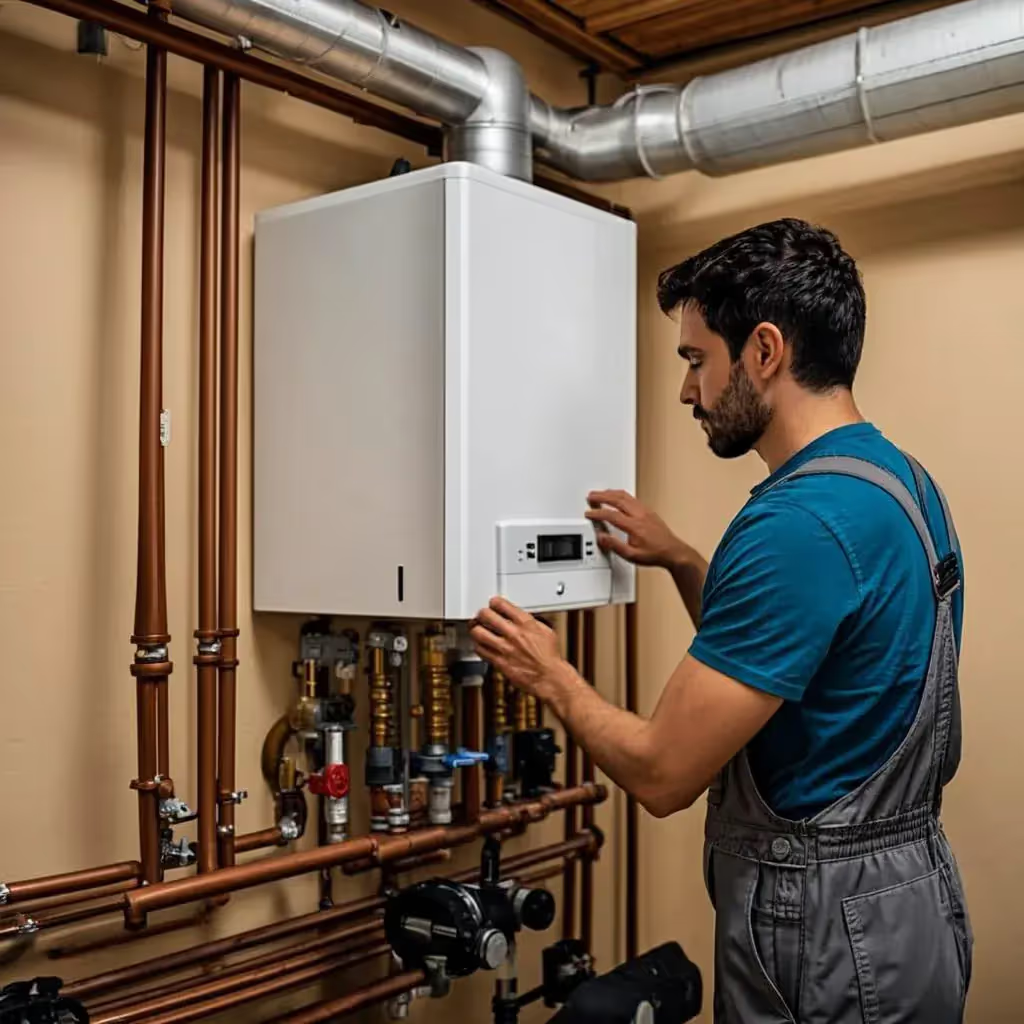
One aside for the quarter of local homes that do not have furnaces at all: if your heat comes from radiators or in-floor loops, you have a boiler, and the October routine is different, watching the pressure gauge, bleeding radiators and checking the relief valve rather than filters and flame windows. Our boiler service crews in Burnaby and New Westminster run the same autumn readiness visits for hydronic homes, with the same flat-rate pricing book.
What the $129 Tune-Up Covers, and What It Does Not
The professional half of October prep is the annual tune-up, $129 flat in our book, performed by a licensed gas fitter, not a salesperson with a gauge. What it actually includes matters, because the industry's favourite trick is the tiered tune-up: a cheap advertised price that inspects nothing and exists to sell you a replacement. A real tune-up in BC includes combustion analysis with measured readings, burner cleaning, flame sensor cleaning, heat exchanger inspection, blower and inducer checks, condensate flush, gas pressure verification, venting inspection and a written report you keep.
What the tune-up does not include is parts. If the inspection finds a failing igniter or a gummed pressure switch, you get a flat-rate quote before anyone touches it, repairs across Metro Vancouver run $180 to $650 for the common ignition, sensor and safety parts, and the quote is good whether you book it on the spot or next week. Every completed repair carries our 2-year workmanship warranty.
If your furnace has not been serviced in more than a year, or you have just moved into a home and do not know its service history, the tune-up is also the cheapest intelligence you can buy: it tells you the unit's age, condition and likely remaining seasons before the January crisis makes the decision for you. If something is already acting up, skip straight to the diagnostic instead: our furnace repair service in Vancouver runs the $89 diagnostic seven days a week, credited to any completed repair, and the same flat-rate book applies from furnace repair crews in Surrey through the Tri-Cities and out to the Fraser Valley.
Book the $129 Tune-Up Before the First Frost
October slots go first because everyone who has had a January lockout books early the following year. Call 604-615-2212 or request a slot online, and a Red Seal gas fitter will run the full checklist with a written report.
Exterior Vents and the Pressure-Switch Trap
High-efficiency furnaces breathe through two plastic pipes that terminate on an exterior wall: one draws combustion air in, one pushes exhaust out. Before ignition, a pressure switch proves that air is actually moving through that circuit. During arctic outflow, the exhaust pipe's moisture plus a hard wind can grow a frost cap over the termination, and drifting snow can bury both. The pressure switch reads the blockage, refuses to let the burners light, and the furnace sits dead in a minus 12 house.
This lockout masquerades as a failed pressure switch, and it gets quoted like one by companies that do not walk the outside wall. The fix is often five minutes with a bare hand: clear the caps, let the pipe breathe, restart. Before and during every cold snap, walk the wall, clear snow and ice by hand, and never chip at a frost-clogged pipe with a screwdriver or anything sharp, because a cracked vent pipe leaks exhaust into the wall. If clearing the caps does not restore heat within one cycle, then something else is wrong and a diagnostic is the honest next step.
Never block, tape over or re-cap a furnace vent to stop noise or condensation, and never run a furnace with a known-blocked exhaust, even briefly. The pressure switch is not an inconvenience, it is the interlock standing between your family and carbon monoxide. Defeat it and you own the consequences.
The Outflow-Week Protocol
When the forecast shows an arctic outflow, the coast drops from rain to minus 10 and colder within a day, and homes that prep for that week specifically almost never meet us after dark. The protocol is short because the window is short.
| When | Move | Why |
|---|---|---|
| Two days before the cold arrives | Install a fresh filter if the current one has more than a couple of months on it | A clean filter keeps airflow, and therefore heat, at spec when runtime peaks |
| Two days before | Walk and clear the exterior vent caps | Starting the week with clear pipes prevents the most common outflow lockout |
| During the cold snap | Hold a steady thermostat setting instead of deep overnight setbacks | Recovery from a deep setback at minus 10 is the hardest work a BC furnace ever does |
| During the cold snap | Keep interior doors at least cracked and all registers unblocked | Closed rooms can starve returns and trip high-limit shutdowns |
| During the cold snap | Re-clear the vent caps after each snowfall or high wind | Frost regrows in hours during outflow, not days |
| If heat fails anyway | Check the thermostat, the breaker, the furnace service switch and the vent caps, then call 604-615-2212 | Eliminating the five-minute causes first gets the real failures to us faster |
A word on after-hours pricing, because cold snaps do not check office hours: our emergency line is staffed 24/7 with live dispatch and an average 45-minute response, and the after-hours premium is a flat $150, posted in advance, never a surprise line on the invoice. Weekday daytime calls carry no premium, and the $89 diagnostic is credited to any repair you approve. For a deeper walkthrough of the first hour of a no-heat event, including the twelve checks worth running before you pick up the phone, our furnace not working guide for Vancouver homes covers it step by step.
What Preparation Costs, and What Skipping It Costs
Every number below is from our flat-rate book, the same numbers we invoice from, with the diagnostics credited and the premiums posted up front. Compare the October column with the January column and the economics of the whole guide collapse into one sentence: preparation is the cheap month.
| Item | Booked in October | Skipped to January |
|---|---|---|
| Your own eight checks | $0 and one Saturday hour | Still $0, but discovered at midnight in a cold house |
| Annual tune-up | $129, scheduled any day you like | Tune-up slots vanish; the queue becomes triage |
| Diagnostic | $89, credited to any completed repair | $89, credited to any completed repair, plus a queue |
| Common repairs, ignition, sensors, safety parts | $180 - $650 | $180 - $650, plus $150 flat after-hours if the failure lands at night |
| Furnace replacement, if the tune-up reveals end of life | from $3,800 installed for an 80% single-stage, $5,500 - $9,000 for high-efficiency | Same equipment, but chosen in a panic, on the coldest week, with the calendar working against you |

If the tune-up finds a furnace at the end of its road, October is also the month you want to learn that, because replacement decisions made in daylight, with quotes in hand and financing from 7.99 percent available, run smoother than the same decisions made during an outflow. And if your furnace is young and healthy, the report becomes the paper trail that keeps your warranty valid and your resale file honest. Furnace prep also pairs with the rest of the house, gutters, hose bibs, pipes and windows, and our complete Vancouver winter prep guide walks the whole building, not just the mechanical room.
City Notes: Same Furnace, Different Houses
The checklist above is universal, but the houses it lands on are not. Four local patterns change what October prep means in practice, and our heating service pages, organized city by city, go deeper on each of them.
Vancouver and Burnaby
Older basements, upflow furnaces and drafty Vancouver Specials. Filter discipline and return-grille airflow matter most, because envelope leaks make marginal airflow look worse than it is.
Surrey, Langley and Delta
Crawlspace and garage furnaces dominate. Vent terminations sit near grade, where snow drifts and landscaping debris collect, so the exterior-walk item is not optional here.
North Shore and Tri-Cities
Humidity and elevation. Deeper lots on slopes mean longer duct runs and more condensate, so the condensate check and blower inspection earn their keep.
Maple Ridge, Abbotsford and the Valley
The coldest outflow readings in the region. Vent frost, longer heating seasons and propane and oil conversions make autumn readiness a bigger deal the farther east you live.
The Winter Prep Cheat Sheet
Everything above, compressed to the decisions. When two rows apply at once, do the cheaper one first and the safer one immediately.
| Your situation this week | The move |
|---|---|
| Filter has more than three months on it, or fails the window test | Replace it today, $0, five minutes |
| Furnace has not been tuned since last winter | Book the $129 tune-up before mid-November |
| First startup smelled dusty for a cycle, then stopped | Normal, keep going |
| Boom at ignition, yellow flame, short cycling or persistent smell | Stop testing, book the $89 diagnostic this week |
| CO alarm older than ten years or missing near bedrooms | Replace or add alarms before the heating season, non-negotiable |
| Exterior vent caps low to grade, near planting or snow drifts | Clear them now, and after every snowfall during outflow |
| Outflow forecast within 48 hours | Fresh filter, clear vents, steady thermostat, doors cracked |
| No heat during the cold snap after the five quick checks | Call 604-615-2212, 24/7, $150 flat after-hours, no surprises |
Frequently Asked Questions
Services From This Guide
Tune-ups, diagnostics and repairs across Metro Vancouver, 20 cities, seven days a week.
Furnace tune-up and repair
The $129 tune-up, the $89 diagnostic credited to repairs, and flat-rate fixes from Vancouver to Abbotsford.
Furnace repair Vancouver
Same-day diagnostics across the city, with the vent-frost and November-wave failures we see every year.
Furnace repair Surrey
Crawlspace and garage furnaces, grade-level vent caps and outflow readiness for Surrey and the Fraser Valley.
24/7 emergency furnace repair
Live dispatch around the clock, average 45-minute response, flat $150 after-hours premium posted in advance.
Related Guides
Vancouver Winter Prep: The Complete Home Checklist
Gutters, hose bibs, pipes and windows, the whole-house version of the October hour in this guide.
HeatingFurnace Not Working? 12 Checks Before You Call
The first-hour playbook for a no-heat event, including which five checks matter most during outflow.
HeatingFurnace Repair vs Replace: The Vancouver Guide
When a January failure is worth fixing and when the honest answer is replacement, with real part costs.

Red Seal certified, licensed gas fitters (BC-PL-2019-4421), $2M insured and 15-plus years in the field, with more than 12,000 jobs completed across Metro Vancouver since 2010 and a 5.0-star rating across 26 Google reviews. We wrote this guide because the same furnace failures arrive on the same two weeks every year, and the families who spend one Saturday in October are the ones we never meet in January. To book instead of DIY, see furnace repair in Vancouver — same-day across the city.
More about our team →Get Furnace-Ready for $129
Book the $129 October tune-up or a free replacement estimate with a Red Seal gas fitter. You get a full written report on your furnace's condition, a fixed flat-rate price for any repair it needs, and financing from 7.99 percent if replacement wins. Zero obligation, same-day slots on most calls. If you would rather hand this to a pro, our heating & furnace services pages cover Metro Vancouver.
No heat right now?
The 24/7 emergency line is answered around the clock with live dispatch and a flat $150 after-hours premium posted in advance. Daytime calls run the $89 diagnostic, usually same-day in Vancouver, Burnaby and Surrey.
Call 604-615-2212 WhatsApp Us