The Honest Answer Up Front
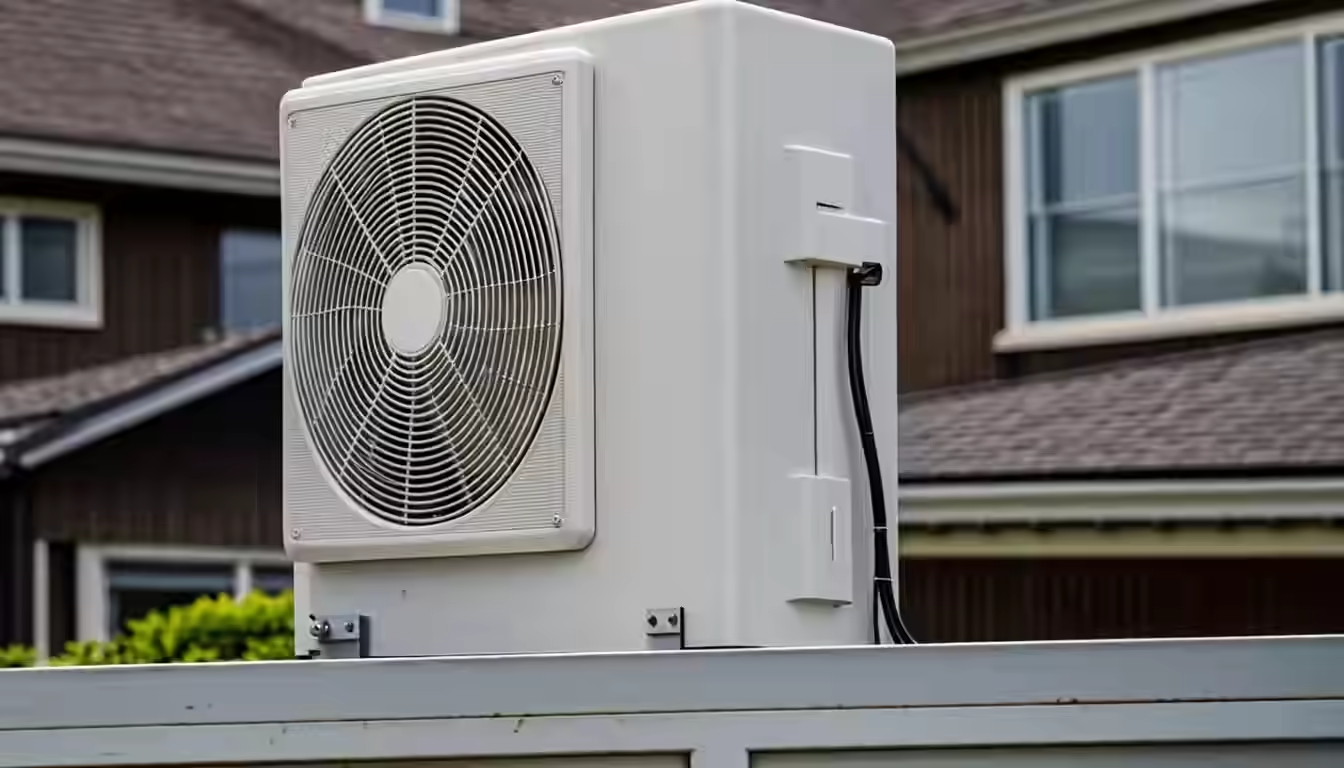
A heat pump needs maintenance twice a year, not once, and the reason is written into the technology: it is the only comfort appliance that works both seasons. Your furnace rests from May to September and your old air conditioner rested from October to April, but a heat pump heats the house through eight months of coastal drizzle and cools it through the July and August heat, racking up more running hours per year than either single-season machine it replaced. Wear that accumulates at that pace does not take care of itself, and the checklist below is what keeping it healthy actually takes.
The honest division of labour is this: the monthly fifteen minutes belong to you, filter, clearance, a listening ear, and the two seasonal deep checks belong to a licensed technician with gauges and meters. You cannot check refrigerant charge or defrost logic with a screwdriver and good intentions, and we would rather say so than sell you a checklist you cannot execute. In return, the professional visits are not vague tune-ups: measured numbers, written down, comparable year over year, which is how small drifts get caught before they become capacity losses and compressor arguments. Systems installed through our heat pump service get their first seasonal visit pattern established at commissioning, and this guide is the homeowner-facing half of that program.
A heat pump works more hours per year than any other machine in your house. The maintenance question is not whether it deserves attention, it is whether that attention arrives twice a year or only when something breaks.
0 seasonal visits a year
Spring before cooling, fall before heating, because one machine serves two seasons and wears like it.
0 of owner care a month
Filter, clearance, condensate and a listening walk-around, the four tasks that catch most problems early.
0 a busy year of runtime
Heating season plus cooling season on one compressor, the workload that makes the twice-a-year cadence earn itself.
$0 diagnostic, credited
When something already feels wrong: full system read on the first visit, fee deducted from any repair that follows.
The Monthly Fifteen Minutes
Everything on this list is safe, needs no tools beyond a garden hose and a vacuum, and catches the majority of developing problems before they cost anything. Run it on the first Saturday of the month and it becomes furniture in your routine, the same as checking the tire pressure. Four tasks, fifteen minutes, and the habit matters more than any single inspection.
Check or change the filter
A clogged filter strangles airflow first and capacity second, and it is the cheapest maintenance item in the house. Ductless heads have washable screens that rinse clean in the sink; ducted systems use replaceable media on the same schedule you already know from furnace life.
Clear the outdoor unit
Confirm 30 centimetres of clear space on the sides and top, and sweep leaves, needles, grass clippings and whatever the last storm delivered. Airflow in equals capacity out, and a choked outdoor coil announces itself as weak heating long before it announces itself as a fault code.
Flush the condensate path
Pour a cup of water into the indoor unit's drain pan or check the outside drips while the unit runs cooling or heavy dehumidification. A slow drain today is an overflow onto a ceiling tomorrow, and the fix is minutes when caught early.
Listen and look
New sounds, new cycle patterns, ice that does not match the weather, a unit that runs longer than it used to, all of it is evidence. Write the date and the observation in your phone, because a trend reported to a technician is worth three separate guesses.
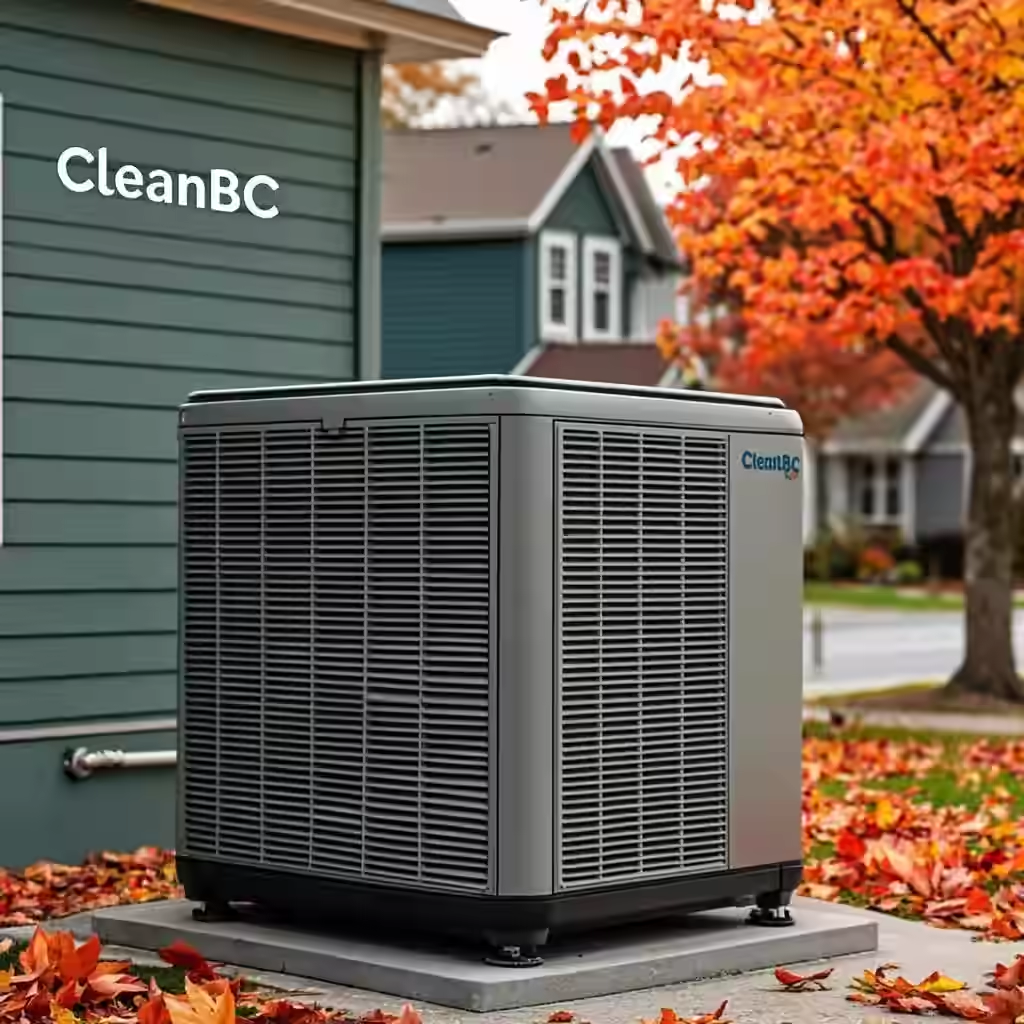
One caution earns its own paragraph: the capacitor inside the outdoor unit holds a charge even with the breaker off, and refrigerant lines are sealed components regulated by code. The monthly fifteen minutes deliberately stops at the panel. Everything past it belongs to licensed hands, and any checklist that tells a homeowner to open the electrical compartment was written by someone who has never met a capacitor.
The Spring Pre-Cooling Checklist
Book the spring visit for April or early May, before the first hot week arrives and the booking queue fills with no-cooling emergencies. The technician's mandate is to confirm the machine is ready to dehumidify and cool, and the list below is what a complete spring visit verifies, in order, with every measurement written on the report you keep.
| Spring task | Why it earns its place on the list |
|---|---|
| Outdoor coil deep clean | Winter grime, moss spores and salt film coat the coil and quietly delete capacity right when July needs it |
| Refrigerant charge verification | A unit short of charge cools poorly, ices in winter and destroys its compressor, and only gauges can catch it early |
| Indoor coil and blower check | Cooling dumps gallons of condensate, and the drain, pan and blower wheel need to be clean and moving |
| Drain line flush and pan treatment | The most common summer water damage we see is a condensate line that a two-minute flush would have saved |
| Capacitor and contactor inspection | The start-of-summer electrical stress lands on exactly these parts, and heat kills them mid-July |
| Cooling performance test | Measured temperature split across the coil, the number that proves capacity rather than assuming it |
| Thermostat and sensor calibration | A sensor reading two degrees off steers the whole machine wrong, in both seasons |
The spring visit is also the right moment for the honest conversation about expectations: what the house felt like last summer, which rooms complained, whether the humidity ever won. A trend of two summers is enough to justify a look at zoning, sizing or a supplemental dehumidification strategy, and April is when that conversation can still be acted on before the heat arrives. Homeowners who want the full context can pair this checklist with the Vancouver heat pump guide, which covers the equipment decisions that maintenance keeps alive.
The Fall Pre-Heating Checklist
October is the month, before the first outflow event turns the coast into a wind tunnel and the phone lines into a queue of no-heat calls. The fall visit verifies the machine's heating half, and its centrepiece is the defrost system, the component whose failure is most expensive to discover in January. This is also the visit where the report from last fall gets unfolded and compared line by line, because drift is the signal.
| Fall task | Why it earns its place on the list |
|---|---|
| Defrost cycle verification | A defrost fault shows up as ice on the coil and capacity loss in the coldest, dampest weeks, so it gets tested on purpose |
| Refrigerant charge and pressures, heating mode | Charge that was fine in July can misbehave at 2C, and heating performance depends on it |
| Auxiliary and supplemental heat test | The electric backup that covers the coldest hours needs to prove it fires, because it is never exercised until the night it matters |
| Airflow and static pressure check | Heating airflow requirements differ from cooling, and a filter change or duct shift can move the number |
| Electrical connections torque and inspection | A year of cycling loosens terminals, and loose terminals become heat, then damage, then a winter call |
| Crankcase heater verification | The small part that protects the compressor through cold standby, invisible until it is not working |
| Cycling behaviour review | Short cycles mean sizing or charge problems, and winter amplifies whatever summer whispered |
Two fall habits multiply the value of the visit. First, do it before the weather: a defrost fault found in October is a scheduled repair, and the same fault found in January is an emergency premium at 11 p.m., $150 flat after-hours is our posted rate, which is honest but still more than daytime. Second, keep the reports: a folder with two springs and two falls in it turns a vague concern into a trend a technician can act on, and it is the document your warranty will want if anything ever goes wrong with the equipment itself.
What the Professional Visit Includes
The difference between a real maintenance visit and a drive-by tune-up is whether numbers were measured and whether you got to keep them. A complete visit on a heat pump touches both halves of the system and ends with a written report. Here is the full inventory, and it is worth printing for the next company you invite, because anything missing from this list is maintenance that did not happen, whatever the invoice called it.
| Item | The measurement that proves it was done |
|---|---|
| Refrigerant charge | Pressures, superheat and subcooling recorded against the unit's specification table |
| Airflow | Static pressure and blower performance, the number that ties filter, ducts and coil together |
| Electrical health | Amp draw on compressor and fan, contactor condition, wiring inspection |
| Capacity | Temperature split across the indoor coil in the operating mode |
| Defrost operation | Forced defrost test on the fall visit, timed and observed |
| Drainage | Flush and flow verification, pan condition, pump test where fitted |
| Controls | Thermostat and sensor calibration against reference readings |
| Report | Every measured value written down and handed to you, dated |
A note on what maintenance is not: it is not a sales presentation with a filter attached. Our visits end with the report and an honest sentence about anything we found trending, and if the answer is nothing, you hear nothing, because the entire economic point of maintenance is that most visits should be boring. The exciting ones get documented properly, quoted flat-rate, and scheduled around your life, not our calendar.
What Maintenance Actually Prevents
Maintenance is not a ritual, it is insurance with a claim history, and the claims it prevents are specific. A dirty outdoor coil costs 5 to 10 percent of capacity quietly, a low charge shows up as ice and a compressor running hot, a blocked drain shows up as a ceiling, and a defrost fault shows up on the coldest night of February as a house that cannot hold temperature. Every one of those has a cheap month and an expensive month, and maintenance is the practice of always catching the cheap one.
The capacity thief
A filmed coil and a tired filter can hide a tenth of your output, which the house experiences as the unit running longer for less result.
The ice cascade
Low charge plus damp cold builds frost faster than defrost can clear it, and capacity falls exactly as the weather deepens.
The ceiling event
A condensate line that a two-minute flush saves is a ceiling repair when it is found by the water reaching the floor below.
The compressor argument
Start-wear and hot running are cumulative, and the warranty question after a year-six failure is answered by your maintenance file or not at all.
There is also an efficiency ledger that never appears on any single bill. A heat pump maintained on schedule holds its rated performance through a decade of coastal duty, and one that is not drifts, a percent here, a percent there, until a five-year-old unit performs like an eight-year-old one. The twice-a-year visit is the cheapest capacity and efficiency you will ever buy back, and unlike replacement, it is priced in minutes rather than thousands.
Ductless-Specific Care
Mini-splits carry the same physics with different plumbing, and their maintenance profile differs in three ways worth knowing. The filters are washable screens behind the head's front panel, monthly-rinse items that a kitchen-adjacent head will need far more often than a bedroom one, because cooking aerosol is a filter's heaviest diet. The indoor coils are exposed to room air directly, so an annual deep clean, chemical and gentle, keeps the blower wheel balanced and the airflow the room was promised. And every head has its own drain and its own float safety, which means every head is a separate water-damage opportunity that the fall and spring visits each address.
The line set, the refrigerant pair between the outdoor unit and each head, deserves a walk-past in your monthly fifteen: look for damaged insulation, oil staining at the flare fittings, which signals a slow leak, and any spot where the line has sagged into a water trap. Multi-zone owners have proportionally more of everything, more filters, more drains, more flare fittings, and the honest maintenance visit on a multi-zone system books time per head, not per system. The full head-location and configuration story lives in our ductless placement guidance, and the maintenance angle is simply this: a well-placed head is easier to maintain, and a badly placed one turns every visit into a negotiation with a ladder.
Coastal Grime and City Notes
The Lower Mainland attacks outdoor equipment with a specific arsenal, and knowing your local weapon changes your maintenance calendar. Salt air reaches kilometres inland, and a coastal film on an outdoor coil is a corrosion accelerant, which is why units in Richmond, Tsawwassen and along the North Shore waterfront earn a spring clean every single year, without exception. Cottonwood poplar fluff, the June snow, packs into coils and freezes into a mat the first damp week of fall, so fluff-season units in Surrey, Langley and the valley need their outdoor clean in July, not September. And the moss that owns this climate will colonize a shaded pad and a north-wall unit given three quiet seasons, which is a placement problem discovered at maintenance time.
Richmond
Salt air and flat coastal exposure, the spring deep clean is annual law, not a suggestion.
Burnaby
Tree canopy and ridge-side wind, fluff and needle load that a July rinse handles.
Vancouver
Dense side-by-sides and laneway units, where clearance and neighbour noise both live.
Langley
Valley dust and agricultural debris, plus the outflow cold that makes fall defrost testing serious.
The regional punchline is that Metro Vancouver is gentle on equipment in temperature and hard on it in everything else, damp, organic debris, salt and shade. The twice-a-year visit handles all of it cheaply, and the monthly fifteen catches the between-season surprises. For the full list of cities we run this program in, the service-area page has the map, and every visit ends with the same written report regardless of which side of the ridge you live on.
Warranty, Records and Real Costs
The warranty story has three honest parts. Manufacturers of cold-climate equipment typically register 10-year parts coverage on the strength of a documented install, and claims against it go smoother with a maintenance file attached, because the first question after a compressor or coil claim is how the system was cared for. Our own workmanship warranty runs two years on every install, and maintenance extends nothing but also forfeits nothing, it simply makes the equipment half easier to defend. Registration itself is part of our install paperwork, so the coverage exists before the first filter change does.
Costs deserve straight talk, because maintenance is where vague pricing hides. The $89 diagnostic applies when something is already wrong and is credited toward any repair that follows, and repairs on the cooling side are quoted inside our $180 to $450 AC repair band, flat, in writing, before the wrench moves. Seasonal maintenance visits themselves are priced by configuration, a single-head ductless visit costs less than a multi-zone or ducted visit, and the number is always confirmed at booking, with the checklist above defining exactly what each visit includes. For comparison, the furnace side of a dual fuel pair runs its $129 flat tune-up, and homeowners comparing total care costs should ask any company the same two questions: what does the visit measure, and what does the report look like.
One last angle, because this province pays people to maintain efficiency: right-maintained cold-climate systems are the equipment class the rebate stack favours, and Combined CleanBC Better Homes, BC Hydro, FortisBC and municipal top-ups can reach $16,000 for cold-climate heat pumps in 2026 — we complete the paperwork. The maintenance connection is that the same performance documentation that supports a healthy system supports the program requirements, and the full program map is in the CleanBC rebates guide. Our service area covers seventeen cities with the same flat-rate sheet, so the maintenance calendar does not change when your address does.
The One-Page Cheat Sheet
The entire guide, reduced to what hangs on the laundry-room wall: two professional visits, four monthly tasks, and the numbers that prove the visits happened.
| When | What happens |
|---|---|
| Monthly, 15 minutes | Filter, outdoor clearance, condensate check, listen for changes, write observations down |
| April-May, professional | Coil clean, charge, drain flush, electrical, cooling test, calibration, written report |
| October, professional | Defrost test, heating-side charge, auxiliary heat test, airflow, torque, report, compared to last year |
| Kitchen-adjacent heads | Filter rinse moves to every two weeks, cooking aerosol is the heaviest filter diet there is |
| Coastal and fluff-zone yards | Spring clean is annual law, July rinse for fluff, salt exposure shortens every outdoor timeline |
| Something feels wrong | $89 diagnostic, credited to repair, cooling-side repairs flat-rated $180-$450 |
| Records | One folder, every report, every observation, the warranty file and the trend line in one place |
Twice a year, measured, written down, and boring on purpose. That is the whole program, and the machine that works more hours than anything else in your house will repay it for a decade.
Book Your Seasonal Visit
Spring or fall, the visit lands on the calendar before the season does, with every measurement written and the checklist above as the contract. Already hearing something odd? The $89 diagnostic reads the system the same week, credited toward any repair.
Frequently Asked Questions
Services From This Guide
Seasonal maintenance visits, defrost diagnostics and repair work across seventeen Metro Vancouver cities, one flat-rate sheet, every measurement written down.
Heat pump service
Installs, maintenance programs and repairs, every visit ending in a written report with measured values.
Heat pump Richmond
Coastal salt exposure handled with annual deep cleans and corrosion-aware maintenance scheduling.
Cooling and AC service
Cooling-side repairs flat-rated $180 to $450 and spring tune-ups on the shared refrigeration circuit.
24/7 emergency service
No-heat calls answered around the clock, average 45-minute response, $150 flat after-hours premium.
Related Guides
The Vancouver Heat Pump Guide
The complete local overview of the equipment this program keeps healthy: costs, sizing, choices.
RebatesCleanBC Rebates: The 2026 Guide
The incentive stack behind cold-climate equipment, and the paperwork that maintenance supports.
HeatingFurnace Repair vs Replace: The Honest Guide
The other half of a dual fuel pair, and the $129 tune-up that keeps its side of the calendar.

Red Seal certified, licensed gas fitters (BC-PL-2019-4421), $2M insured and 15-plus years in the field, with more than 12,000 jobs completed across Metro Vancouver since 2010 and a 5.0-star rating across 26 Google reviews. We wrote this guide because maintenance is the least glamorous and highest-return practice in home comfort, and half the heat pumps in this region run on no schedule at all. This is the same checklist our technicians execute, including the parts homeowners can safely own and the parts they should never touch. To book instead of DIY, see heat pump repair in Surrey — same-day across the city.
More about our team →Put Your Heat Pump on the Calendar
Book a $89 diagnostic or a seasonal maintenance visit with a Red Seal technician. You get the full checklist above executed and measured, a written report you keep, and flat-rate pricing confirmed at booking with no hourly clock. Zero obligation, and same-week scheduling on most calls. We cover this in detail in BC Furnace Maintenance Checklist: 15 Points. If you would rather hand this to a pro, our heat pump services pages cover Metro Vancouver.
Heat pump struggling right now?
No-heat and no-cooling calls are answered 24/7 with live dispatch and flat after-hours pricing posted in advance. Daytime? The $89 diagnostic is usually same-day in Vancouver, Burnaby and Surrey.
Call 604-615-2212 WhatsApp Us