The Honest Answer Up Front
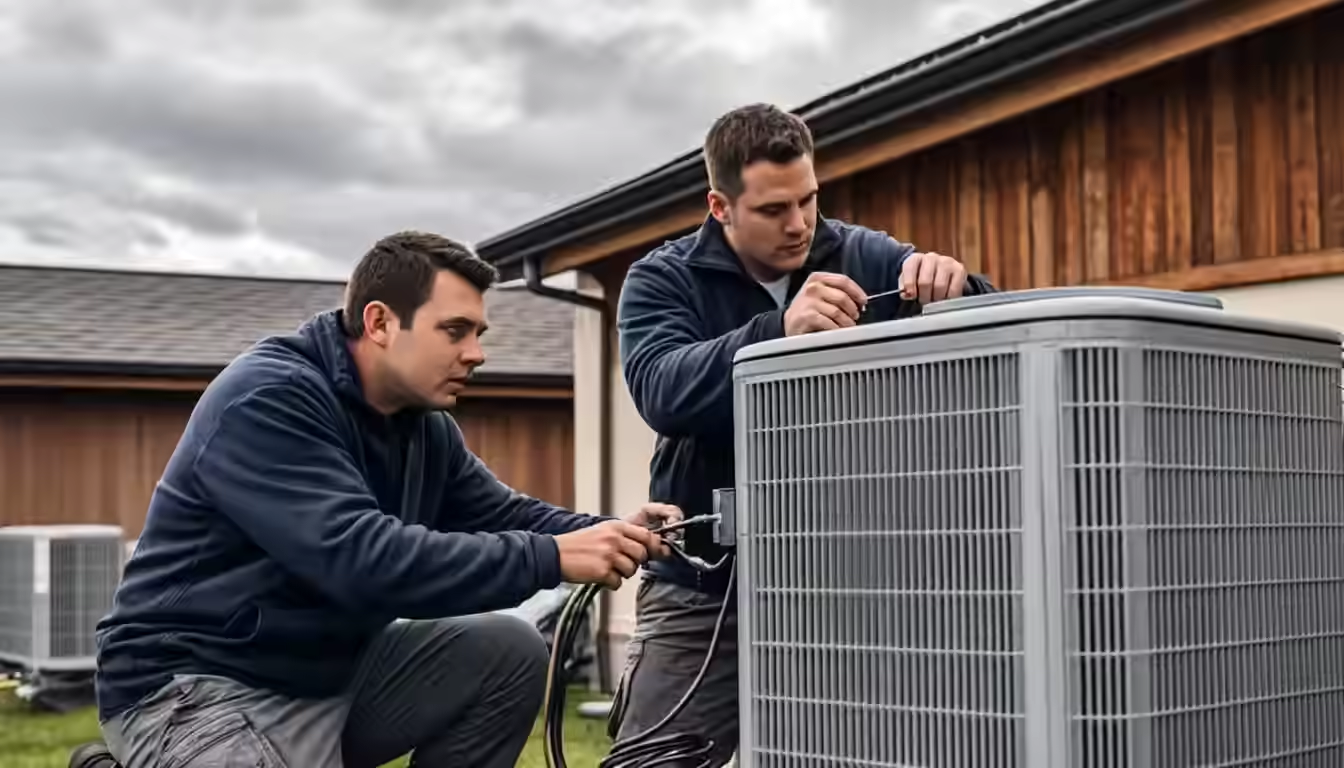
Here is the short version, without the scary headlines. New homes built in British Columbia must now be designed with cooling capability. That is a genuine change: for most of this province's building history, houses were engineered to trap heat, not reject it, and the 2021 heat dome exposed exactly what that costs. New houses, laneway homes, townhouses and multiplexes now get designed with cooling in the plans from day one.
What the rule does not do is touch the house you already own. There is no retrofit mandate, no inspector coming for your 1974 Vancouver Special, no requirement to install anything when you replace a furnace. The code governs new construction. For existing homes, the change is showing up as market pressure instead: buyers ask about cooling, tenants expect it, and the equipment that gets quoted to you increasingly delivers it whether you asked or not.
If you are adding cooling to an existing home in 2026, the honest numbers are: a window or portable unit at roughly $300 to $700 for one room, central AC on existing ductwork at $3,800 to $6,500, a single-zone ductless heat pump at $3,800 to $5,500 that also heats, and a ducted cold-climate heat pump at $6,500 to $14,000 that can carry the whole house, with CleanBC, BC Hydro, FortisBC and municipal rebates that can reach $16,000 combined on eligible installs.
0 heat dome deaths
The 2021 event that ended the era of building BC houses for heating only.
New homes: cooling is code
Active cooling or a passive design that holds indoor temperatures in hot weather, in the plans from the permit onward.
$3,800 to $6,500
Central AC installed on existing ductwork, the single-season option for homes that already have a healthy furnace.
Up to $16,000 combined
The rebate stack on eligible heat pumps. Amounts change; we verify every program at booking.
Bottom line
New homes must cool. Existing homes must decide. If you are buying equipment in 2026, buy something that cools, because the market, the code and the climate have all moved the same direction.
What the Code Actually Requires
Strip away the jargon and the requirement is straightforward: new residential buildings must be designed so that indoor temperatures stay within acceptable limits during hot weather. Designers can satisfy it two ways. The passive path uses the building itself, shading, orientation, insulation, window performance, ventilation, to keep heat out. The active path installs equipment, most commonly a heat pump or central AC, that can reject heat on demand. In practice, most Metro Vancouver builders choose active cooling, because lot sizes are tight, west-facing glass is everywhere buyers want it, and a heat pump solves the problem while also heating the house.
The requirement lives alongside the BC Energy Step Code, which sets energy and airtightness targets for the same new buildings. The two rules push in the same direction: tight, insulated envelopes that need small amounts of heating in winter and small amounts of cooling in summer, served by modulating equipment. If you want that half of the story in detail, our BC Step Code 2026 guide covers it, including why gas furnaces struggle to fit inside tight small homes.
One nuance worth knowing: the City of Vancouver writes its own building by-law, which tends to run ahead of the provincial code on energy matters. So the exact requirement for a specific project depends on your municipality and your permit date. That is a question for the permit counter, and asking it early costs nothing and prevents a redesign later.
Why the Rule Exists
In late June 2021, a heat dome pushed Lytton to 49.6 degrees Celsius, the hottest temperature ever recorded in Canada, and held Metro Vancouver above 30 degrees for days. More than 600 British Columbians died in that event, most of them older people in homes that were never designed to cool. It remains the deadliest weather event in Canadian history, and it happened in a region where almost no single-family home had air conditioning a decade earlier.
The buildings were not defective. They were optimized for a different problem: holding heat through nine months of rain and cloud, with west-facing windows to catch what sun exists. That design philosophy turned lethal during one week of extreme heat, and the public response moved faster than most code changes in history. The BC Coroners Service recommended cooling be treated as a life-safety matter, and the building code followed: new homes must now be able to keep occupants safe in heat, not just warm in cold.
The climate context matters too. Metro Vancouver's number of hot days above 25 and 30 degrees has been creeping upward for decades, and the marine heat shield that used to cap summer temperatures is not as reliable as it was. The code change is not about comfort trends. It is about the one week per decade when the house becomes the hazard, and our heat dome preparedness guide covers what to do when that week arrives before your equipment does.
What It Means for Existing Homes
Nothing in the code forces retrofits. But after 12,000-plus jobs across Metro Vancouver since 2010, we can tell you what actually changes for existing homeowners, because we watch it happen on quotes every summer. First, buyer expectations shifted after 2021. A house that cooks in July now gets priced like a house with a known defect, and the inspection report mentions it. Second, tenants now ask about cooling when they sign, and landlords respond, usually with a ductless zone in the bedrooms. Third, every replacement decision has quietly become a cooling decision: when the furnace dies, the quote for a heat pump is sitting right next to it, and the heat pump cools.
The honest framing is this: you are not required to cool your house, but you are increasingly living in a market that assumes it. If your equipment has five-plus years left, do the cheap passive work in chapter 8 and revisit when something breaks. If you are replacing anything major in 2026 or 2027, make the cooling question part of that decision, because doing it once is cheaper than doing it twice.
Your Cooling Options Compared
Here is the full menu for an existing Metro Vancouver home in 2026, with our real install ranges. Every home is different, but the shape of the decision is almost always one of these five rows.
| Option | Cost (CAD) | Honest fit |
|---|---|---|
| Window or portable unit | $300-$700 per room | One bedroom overnight; a stopgap, not a strategy |
| Central AC on existing ducts | $3,800-$6,500 | Ducted home with a healthy furnace, cooling only |
| Single-zone ductless heat pump | $3,800-$5,500 | One hot zone, a suite, a laneway; heats in winter too |
| Multi-zone ductless heat pump | quoted per system | Whole home without touching ductwork; per-room control |
| Ducted cold-climate heat pump | $6,500-$14,000 | Full replacement of furnace plus AC in one system |

Two notes on the table. Ductless versus central is a real fork for a lot of homes, and the comparison depends on your ductwork's condition, so our ductless vs central AC guide walks that fork in detail. And if you are leaning AC-only because your furnace is young, that is a legitimate call; if your furnace is 15-plus years old, paying for AC on top of a dying furnace is the expensive path, and the AC installation guide for Vancouver covers the sequencing honestly.
Why Heat Pumps Are the Default Answer
For new construction, the reason is arithmetic: the same tight envelope that drops the heating load also makes cooling easy to deliver, and a heat pump does both jobs from one refrigerant circuit, one electrical service and one line set. That is why nearly every laneway house and multiplex permitted in Vancouver recently has a heat pump on the side of it. For existing homes, the reason is money: the CleanBC Better Homes program, BC Hydro and FortisBC offers and municipal top-ups stack on eligible heat pump installations to as much as $16,000 combined, and limited-time bonuses of up to $1,000 appear in some seasons. AC-only equipment does not qualify for most of that stack, because the programs are designed to move homes off fossil fuel heating, not to add cooling to a gas system.
We install and service Carrier, Lennox, Trane, Goodman, Rheem and Daikin, and the equipment landscape has consolidated around cold-climate inverter units that hold capacity well below freezing, which matters even in mild Vancouver because the efficiency curve follows outdoor temperature. The choice between brands matters less than the choice of installer: load calculation done properly, commissioning documented, refrigerant charge verified. A heat pump installed badly is an expensive noise machine; one installed well is the quietest, cheapest-to-run system most Metro Vancouver homes have ever had. The Vancouver heat pump guide covers equipment selection, and our crews handle heat pump installs in Langley and every other city we serve.
Operating Costs: The Honest Math
Cooling season here is short, and that keeps the electricity bill modest. A typical detached Metro Vancouver home running central AC only on hot days spends roughly $80 to $200 for the whole season, depending on setpoint, insulation and how west-facing the living room is. Ductless inverter systems usually land at the low end because they modulate instead of blasting. The bill-shock stories you hear are almost always about electric baseboard heating in winter, not AC in July.
The more interesting math is annual, not seasonal, and it is where heat pumps earn their rebate money. A heat pump moving heat with a coefficient of performance of 2.5 to 3.5 delivers two and a half to three and a half units of heat per unit of electricity, while even a 95 percent gas furnace delivers less than one unit of heat per unit of gas burned. Whether that translates to savings depends on the BC Hydro and FortisBC rates at the time and your home's insulation, which is why we run the numbers on the actual utility bills during a quote visit instead of quoting a generic percentage. Our heat pump cost & rebate guide covers that math in detail.
| Cost item | Typical range | What moves it |
|---|---|---|
| Seasonal AC electricity, detached home | ~$80-$200/summer | Setpoint, insulation, west-facing glass, tier usage |
| Annual maintenance visit | $129 tune-up | Keeps warranties enforceable and efficiency at spec |
| AC or heat pump repair, mid-life | $180-$450 | Capacitors, contactors, fans; the $89-$129 diagnostic is credited |
| Winter offset, heat pump vs aging furnace | case by case | We run it against your actual BC Hydro and FortisBC bills at quote time |
Bottom line
Cooling itself is cheap in Metro Vancouver; it is heating that dominates the bill. Choose equipment for the season you actually pay for, and treat cooling as the bonus that comes attached to a heat pump decision.
Passive Cooling That Saves Money First
Before any equipment quote, do the cheap things, because they shrink the size of the equipment you eventually need. Exterior shading is the champion: an awning, exterior blind or a deciduous tree on the west face blocks heat before it enters the glass, which is several times more effective than closing interior blinds after the heat is already inside. A mature birch or maple that leafs out in May and drops in October is a passive cooling system with a landscape budget.
Second, the attic. Afternoon sun hits the roof, and an under-insulated attic with a leaky hatch turns the top floor into a storage heater that releases all evening. Topping up attic insulation and sealing the hatch is the highest-return passive move in most Metro Vancouver homes. Third, night flushing: when the marine air arrives in the evening, open windows on opposite sides of the house and flush the day's heat out. It works best in the days before the equipment exists and every night after.

Windows are the big-ticket passive item. Double-pane units installed run $650 to $950 per unit and triple-pane $800 to $1,400, and the right glass coating on a west face measurably cuts heat gain; our windows and doors service covers the options, and the Vancouver window guide does the honest cost math. Do these things first, and the heat pump you eventually install gets smaller, quieter and cheaper.
Strata and Rental Situations
Strata owners have an extra decision-maker, but the news is better than most expect. Most Metro Vancouver strata bylaws require written approval for anything mounted on the building exterior, and heat pump condensers count. What gets approvals granted is a one-page proposal: condenser location and mounting, the manufacturer's noise rating, refrigerant line routing, and the installer's licence and insurance. Compact units designed for condo patios and balconies have become common precisely because they clear these hurdles, and because they cool one unit without touching the building's shared systems.
Renters have a different problem: you cannot install equipment, and portable AC is the realistic tool. One single-hose portable for the bedroom, run only overnight, is an honest solution for the handful of hot weeks this region gets. The conversation worth having with the landlord is the one where the tenant points out that a $3,800 to $5,500 ductless heat pump heats in winter too, cutting the electric baseboard bill and making the unit more rentable. Landlords who have done it rarely regret it; our crews handle strata paperwork and approvals as part of the install process.
What a Cooling Install Looks Like
A proper cooling install starts with a load calculation, not a brochure. We measure the envelope, the windows, the orientation and the ventilation, and size the equipment to the actual house. Oversizing is the quiet killer of comfort: a unit too big for the space cools the air fast, satisfies the thermostat, and leaves the room feeling cold and damp because it never ran long enough to wring out humidity. Undersizing shows up in August. Right-sizing shows up on your bill for fifteen years.
The install day itself: electrical permit filed, condenser set on a level pad with clearances respected, line set run, vacuum pulled to spec, refrigerant charge verified against the manufacturer's subcooling and superheat targets, airflow balanced, controls configured, commissioning sheet signed. For central AC on existing ductwork it is usually one day. For ductless, half a day per zone. For a ducted heat pump replacing a furnace, one to two days including the gas decommission. Maintenance afterward is the same discipline as heating: a $129 annual tune-up, a clean filter, and clearances kept clear. Our spring AC maintenance checklist covers what we check and what you can check yourself.
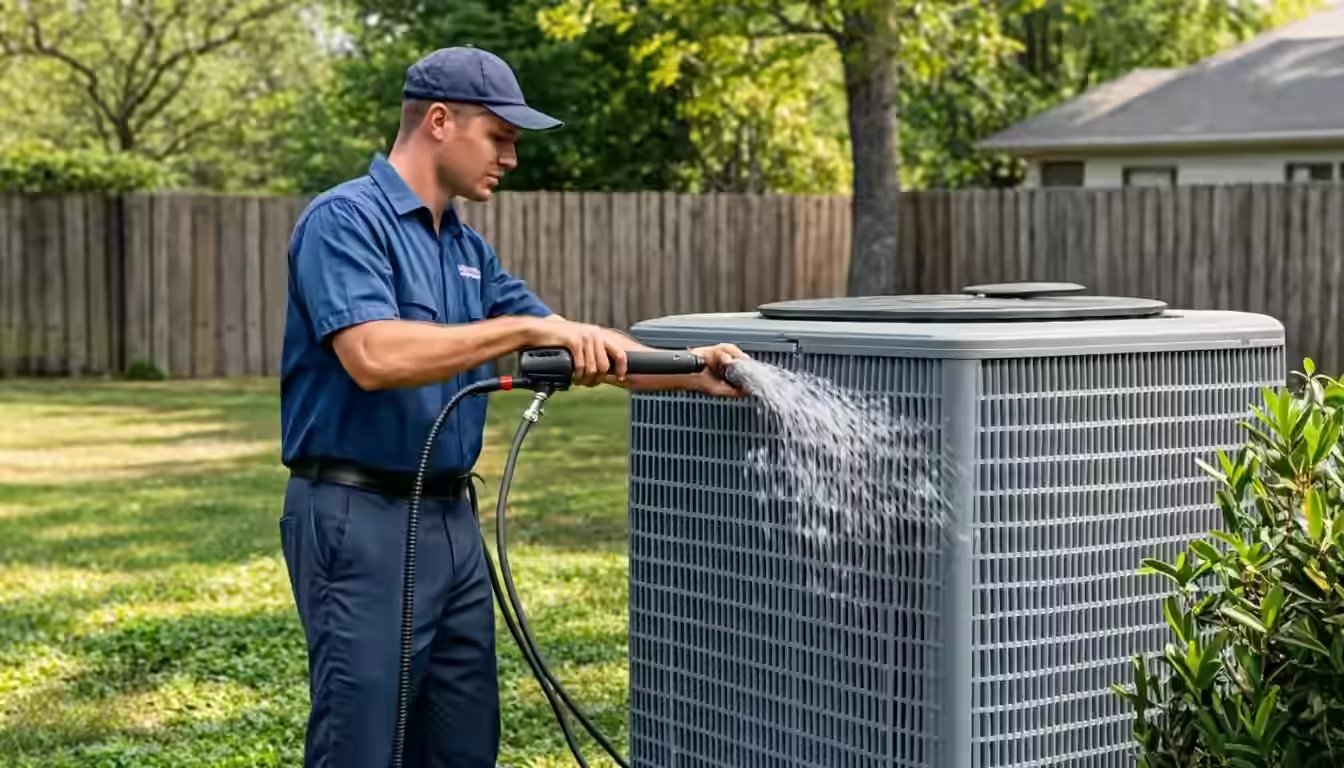
We run AC installations in Vancouver and 16 other cities, flat-rate quoted before work starts, 2-year workmanship warranty on every job, and CleanBC, BC Hydro, FortisBC and municipal rebate paperwork handled on eligible heat pump installs. If you already have cooling that limps through July, AC repair runs $180 to $450 with an $89 to $129 diagnostic credited to the repair.
The Cheat Sheet
The whole guide, compressed into the table we would give a neighbour over the fence.
| If this is you | The move that makes sense |
|---|---|
| Building new, laneway or multiplex | Cooling is code; a heat pump satisfies it and heats too |
| Furnace under 10 years, want cooling | Central AC at $3,800-$6,500 is the honest add |
| Furnace 15-plus years or dying | Price a ducted heat pump once, with the rebate stack included |
| One unbearably hot room | Passive fixes first, then one ductless zone at $3,800-$5,500 |
| Strata unit | Bylaws first, one-page proposal second, patio-rated heat pump third |
| Renting | A bedroom portable plus a conversation about the baseboard bill |
The cooling requirement is one of the rare code changes you can read as good news: the houses being built now will keep people safe in the next heat dome, and the equipment that makes it happen also cuts winter bills for the rest of us. If you want the numbers run for your specific house, that is what the quote visit is for: 604-615-2212, or the form below, with financing from 7.99 percent on approved credit.
Frequently Asked Questions
Services That Solve This Faster
Cooling and AC service
Central AC, ductless and heat pump cooling, installed and serviced across 17 Metro Vancouver cities.
Heat pump installation
Heating and cooling in one system, with CleanBC paperwork handled and rebates up to $16,000 combined.
AC installation in Vancouver
Local crews, real load calculations and flat-rate quotes, usually same-week in shoulder season.
Heat pumps in Langley
Hot upstairs floors are a Fraser Valley classic; our Langley crews fix them with right-sized systems.
Related Guides From Our Team
Heat dome preparedness for BC homes — the emergency-side playbook for the next extreme heat event.
AC installation in Vancouver: the guide — the full walkthrough if you have decided on central AC.
Ductless vs central AC — the head-to-head comparison most homeowners actually need.
The Vancouver heat pump guide — the two-season option the code is quietly steering everyone toward.
CleanBC rebates in 2026 — how the rebate stack works on cooling-capable heat pumps.
Red Seal certified, licensed gas fitters (BC-PL-2019-4421), $2M insured, 15-plus years on the tools, 12,000-plus jobs across Metro Vancouver since 2010, 4.9 stars from verified reviews. We wrote this guide because Metro Vancouver homeowners deserve the numbers, the code references and the honest trade-offs before anyone touches a wrench or a wallet.
More about our team →Talk to a Real Technician About This Today
Book a visit with a Red Seal technician: a real diagnostic, a written flat-rate quote before any work starts, honest repair-versus-replace math, CleanBC rebate paperwork handled and financing from 7.99 percent with approved credit. Emergencies answered 24/7 at 604-615-2212.
Top floor cooking in July?
Cooling quotes across Metro Vancouver with real load calculations, flat-rate pricing and CleanBC paperwork handled on eligible heat pumps. Diagnostics run $89 to $129 credited to any repair, and financing starts at 7.99 percent with approved credit.
Call 604-615-2212 WhatsApp Us