
The Honest Answer Up Front
For most BC homes with equipment a decade old or less, a maintenance plan is worth it, and not for the reason the sales sheet leads with. The discount is the smallest part. What a plan actually sells is compliance and memory: manufacturers generally require documented annual service, and homeowners, all of us, mean to book it and then do not. A plan flips the calendar responsibility to the company. Our plan customers get their text, their appointment, their photo report and their written record every year without lifting a finger, and that record is exactly what a warranty claim asks for.
The honest exceptions exist and we tell people about them: a home two years into a builder warranty on brand-new equipment, a house about to be gutted or sold with replacement already scheduled, a vacant rental with no occupied-season to protect. For everyone else, the arithmetic is simple on our side of the trade: one $129 furnace tune-up, a second system's service, priority booking when January or July arrives, and 10 percent off any repair that surfaces, wrapped at $199 a year, against plans across the region running $149 to $250.
This guide is written for homeowners across the twelve Metro Vancouver and Fraser Valley cities we serve, because this climate is uniquely hard on skipping maintenance: a wet coastal winter that corrodes, a heat dome summer that stresses, and a shoulder season short enough that booking windows close fast. The chapters below compare plans line by line, run the five-year math, and finish with the situation-by-situation verdict so you can skip straight to your row.
A maintenance plan is not insurance against breakdowns; nothing is. It is a scheduled relationship with the equipment, and the scheduled part is the product. The homeowners who benefit most are the ones who were never going to remember September.
0 jobs since 2010
Heating and cooling service, repair and installation completed by our Red Seal team across Metro Vancouver.
0 avg response
Average 45-minute arrival on 24/7 no-heat calls, with a $150 flat after-hours premium posted in advance.
0 star rated
5.0 stars across 26 Google reviews, including long-time plan customers writing about the visits that caught things early.
0
The $89 diagnostic on any repair call, credited to the work that follows, plan member or not.
What a Maintenance Plan Actually Buys
Strip the brochure language and every plan in this market is some combination of five things. The annual service visit is the core: the 15-point inspection, clean and calibration, with the written report. Priority booking is second, and in this climate it is worth more than people expect: when the first cold snap of November or the first heat wave of July lands, every service company in the region goes onto a waitlist, and plan customers move to the front of it. Heat-dome priority scheduling for plan members is written into how we dispatch, and it is the difference between a Monday visit and a Thursday one in the weeks that matter.
Repair discounts come third, usually around 10 percent, applied against repairs that for our book run $180 to $650 depending on the part and scope. Fourth is record-keeping: a dated service history with photo documentation, which is the paperwork warranties and future buyers both respect, and which the plan generates automatically because the visits happen. Fifth, with some companies, is transferability or credit toward replacement, and this is where reading the fine print matters, because terms vary shop to shop.
What no plan buys, and any honest company will say so: immunity from breakdowns, free parts, or priority on emergency dispatch above genuine no-heat emergencies. A plan improves the odds and shortens the queue; it does not repeal physics. Anyone selling a plan as breakdown insurance is selling the wrong product, and the heating services and cooling pages carry the flat-rate numbers so you can check the math yourself.
The BC Price Landscape: $129 Tune-Ups, $149 to $250 Plans
The regional price structure is simple enough to hold in your head. A single furnace tune-up runs $129 through our flat-rate book: the 15-point inspection, clean and calibration, with the written report. Standalone annual maintenance on one system, booked year by year, lands in the $149 to $229 band across the region. Full maintenance plans, the ones that wrap both furnace and air conditioner, priority and discounts, run $149 to $250 a year depending on the shop and what is included.
| Option | Typical cost | What you get |
|---|---|---|
| Single tune-up, pay-per-visit | $129 | The full 15-point furnace service and report, once, no priority or discounts attached |
| One system, booked annually | $149 - $229 per year | Same service on a yearly rhythm; booking effort and memory stay with you |
| Two-system maintenance plan | $149 - $250 per year | Furnace and AC service, priority booking, repair discounts, service records kept for you |
| Diagnostic on a repair call | $89, credited | Full diagnosis with the fee credited to any repair that follows, plan member or not |
Two pricing patterns deserve a warning. A plan priced dramatically below this range usually recovers the difference in recommended repairs, because the cheap visit has to pay for itself somehow; a plan priced dramatically above it should come with a line-by-line explanation of what the extra hundred dollars buys. The cooling services and heating pages publish the same numbers we quote at the kitchen table, and that consistency is the whole point of flat-rate pricing.
What $199 a Year Covers With Us
Our plan is $199 a year and it covers both systems: the furnace and the air conditioner. Each gets its 15-point tune-up in its own season, the furnace in fall, the AC in spring, and each visit ends with a written report and photo documentation on your phone. Priority booking is included, which means our dispatch moves you to the front of the line for routine visits and into heat-wave priority when July arrives, and members get 10 percent off any repairs the visits surface, repairs that otherwise run $180 to $650 through the flat-rate book.
The part our long-time plan customers write reviews about is the relationship half: they get texted to schedule, the same technicians come back year after year, the photo reports build a file, and the small things get caught while they are still small. A worn flame sensor found at a fall tune-up is a five-minute part; the same sensor found at 9 p.m. in January is a no-heat call, a $150 after-hours premium and a cold evening. That is the product. We are not selling heroics; we are selling the calendar.
Boilers and heat pumps follow the same structure with their own seasonal logic, and the boiler side of the house runs its own service band, $149 to $250, covered in the boiler pages. If your mechanical room is mixed, a furnace plus a ductless heat pump, the plan simply wraps both pieces, because the point is one calendar, not a taxonomy of equipment.
The Math: One Bad Winter Versus Five Years of Plans
Run the five-year arithmetic honestly, both directions. Five years of our $199 plan is $995. Five years of pay-per-visit on two systems, $129 for each furnace tune-up and the AC service alongside, is roughly the same money before a single discount or priority minute, which is the honest starting point: the plan is not more expensive than what you should be doing anyway; it is the same budget with the discipline attached.
Now the asymmetry. A single ignored ignition failure in December becomes a no-heat call: the $89 diagnostic, credited to the repair, a repair in the $180 to $650 band depending on the part, possibly the $150 after-hours premium, and the intangible line nobody invoices, a night without heat with a family in the house. Dirty condenser coils alone can cut cooling efficiency by double digits, and an aging furnace running out of calibration quietly spends gas money all winter. The plan's job is to convert those lottery tickets into scheduled, smaller line items. It does not guarantee zero emergencies; nothing does. It shifts the odds, and the odds are what the price buys.
The other side of the ledger, said plainly: if your equipment is new and covered, your home is ten minutes from every service truck in the region, and you are the rare homeowner who actually books September without being asked, the five-year math can favour paying per visit, and Chapter 7 is for you. For everyone else the furnace repair crews in Surrey and the AC repair crews see the same pattern every January and July: the no-heat and no-cooling calls skew hard toward homes with no service history. When bigger equipment decisions eventually arrive, replacement, heat pump conversion, the planning pages, from the repair-versus-replace guide to the CleanBC rebates guide and our financing options from 7.99 percent, all work better with a service file behind them.
The Warranty Fine Print That Decides the Question
Here is the clause that quietly settles the plan question for most homes: manufacturer warranties on furnaces, air conditioners and heat pumps generally require annual maintenance by a qualified technician as a condition of coverage, and when a major claim lands, a heat exchanger, a compressor, the first thing the manufacturer asks for is proof. Notarized inspectors do not visit your basement; claims are audited on paper, and the paper is dated service records. A plan that generates a written report every year is building exactly the file the manufacturer's warranty department wants to see, and it is building it whether or not you would have kept it yourself.
The registrations matter too. We register manufacturer warranties, up to 10-year parts coverage on the equipment we install, as part of the install, and registration plus maintenance records together are what make that coverage real when it counts. Ten-year parts coverage on a compressor is worth real money; a claim denied for missing service history is the expensive way to learn what the fine print meant. The tune-up report our technicians leave behind is written for the manufacturer's questions as much as yours.
One honest caveat: warranty terms vary by manufacturer and by equipment line, and your documents outrank this guide. If a plan is being sold to you primarily as warranty protection, ask for the warranty clause in writing and read it once; the conversation takes ten minutes and it is the difference between coverage that is real and coverage that is decorative.
Five Years Without a Service File?
Start with the $129 tune-up or wrap both systems in the $199 plan, priority and records included. Call 604-615-2212 or get a free quote.
Who Should Skip the Plan
The honest list, short and specific. Skip the plan, or at least wait, if: your home is under two years of builder warranty coverage on brand-new equipment, because the builder's program is already paying for the first services; you have a signed replacement scheduled inside the year, because paying to maintain equipment that is leaving is paying twice; the property is vacant, a vacation home or an unrented suite, with no occupied winter to protect; or the equipment is genuinely at end-of-life, where the right spend is the replacement conversation, not the maintenance one.
The borderline case worth naming: the meticulous homeowner who genuinely books every September and every May, keeps the receipts and reads the reports. That person can run pay-per-visit forever and lose nothing but the priority queue and the 10 percent, and we would rather tell them that than sell them a filing service they already perform. The plan's honest market is everyone else, which is most of us.
If you are unsure which camp you are in, the decision runs the same direction as the repair-versus-replace question: if the equipment has more than three or four strong years ahead, the plan pays its way; if it is living on borrowed time, put the money toward what comes next and start the replacement file with a diagnostic instead.
Plan Versus Pay-Per-Visit, Compared
The same two systems, two ways of paying for their care, side by side. Numbers are our flat-rate book; other shops in the region sit inside the same bands.
| Line item | Pay-per-visit | Maintenance plan ($199/yr) |
|---|---|---|
| Annual furnace tune-up (15-point) | $129 booked by you, every September | Included, booked for you |
| Annual AC service | Booked separately by you, each spring | Included, same calendar |
| Priority booking | None; seasonal waits apply | Front of the line, heat-wave priority in July |
| Repairs that surface | $180 - $650 flat-rate | Same rates, 10 percent off |
| Diagnostic on breakdown | $89 credited to repair | $89 credited to repair, same |
| Service records for warranty | Yours to keep, if you keep them | Kept for you, every visit dated |
| After-hours premium, if ever needed | $150 flat | $150 flat, same |
| Memory and discipline | Yours | The company's |
Read the last two rows twice. The money rows mostly wash; the discipline rows are the product. Every homeowner believes they will book the September visit, and the ones who actually do, year after year, are the ones the plan was invented to replace.
What a Real Tune-Up Includes: The 15 Points
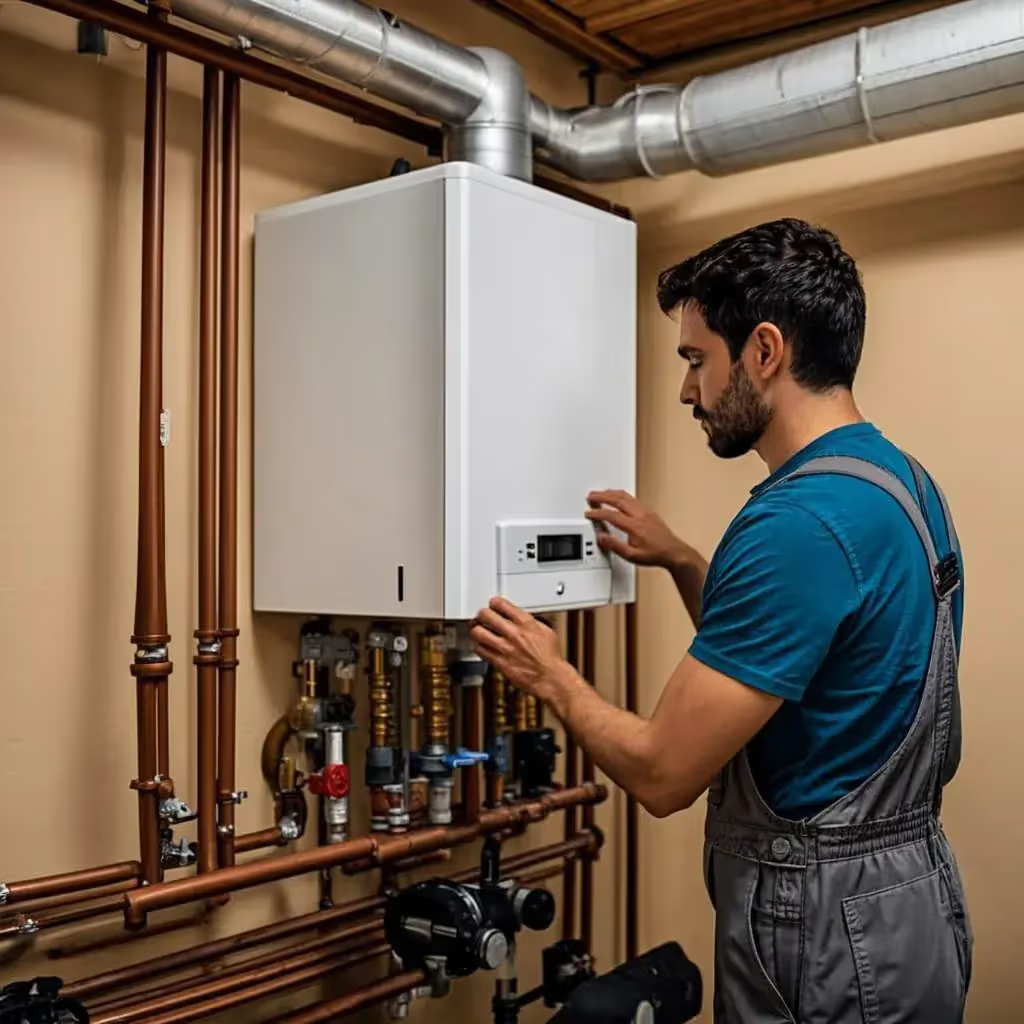
A tune-up you can audit, because "15-point" should mean something. On the furnace side: heat exchanger inspection, burner and igniter condition, flame sensor cleaning, gas pressure and temperature rise measurement, blower and filter path, venting and condensate drainage, safety and limit control testing, thermostat operation, and the combustion and CO checks that close out every visit. On the AC side: coil cleaning, refrigerant and pressure checks, electrical connections and capacitor readings, drain pan and line verification, and a performance test against specification.
The output is the written report: what was measured, what was cleaned, what was found and corrected, with photos. That report is the warranty paper, the resale paper and the second opinion all in one, and if any company's "tune-up" produces nothing you can hold, you bought a visit, not a service. An hour with a Red Seal gas fitter is the honest shape of the job, and the gas side of it, pressures, combustion, CO, is exactly the part that requires the licence.
Questions to Ask Before You Sign Any Plan
These questions work on our plans and everyone else's, and the answers should be short. If any answer comes back foggy, the fog is the answer.
- What exactly is included each year, systems, visits, points, and is the written report part of the price or an extra?
- What does priority actually mean here, front of the routine queue, heat-wave dispatch, or a marketing word?
- What is the repair discount applied against, flat-rate prices you can see in advance, or numbers invented on the driveway?
- Who does the work, the same licensed technicians year over year, or whoever is free that week?
- What happens when equipment is replaced, does the plan transfer, credit, or vanish?
- What is the cancellation term, month to month or an auto-renewing commitment?
Flat-rate pricing is the tell that separates the trustworthy answers from the evasive ones: a shop that publishes its repair and tune-up numbers, as our heating and cooling pages do, can afford honest plan math, because the plan is a scheduling product on top of prices you could have paid anyway. A shop that will not quote a repair until the driveway conversation can make any plan look like a bargain once.
Timing in BC: September and May Are the Bookends
The coast runs two equipment seasons and one short shoulder between them. Furnace service belongs in September or early October, before the first cold snap converts every small ignition issue into a no-heat call, and AC service belongs in May or early June, before the first heat wave does the same to cooling. The plan simply puts both dates on the calendar; the holdouts who book late discover that November and July are the two months when every technician in the region is spoken for.
The rhythm holds across the twelve cities we serve: Vancouver and Burnaby compress it, their older housing stock entering heating season hardest; Surrey, Langley and the Fraser Valley east to Abbotsford stretch both seasons with colder outflow winters and hotter valley summers; Richmond and Delta push the AC season earlier with water-warmed nights; New Westminster, North Vancouver, Coquitlam, Port Coquitlam and Maple Ridge run the classic coast pattern with their own canopy and elevation quirks. Same bookends everywhere, different sharpness. The service areas page carries the regional response details, and the winter prep guide covers the rest of the October checklist.
Joining mid-year is fine and common: start with whichever system is about to work hardest, the furnace if it is October, the AC if it is June, and the plan alternates from there. The worst timing decision is the default one, waiting until the equipment fails to meet its technician.
The Verdict, Situation by Situation
Find your row. When two apply, take the earlier one, and remember the plan question is really the September question in disguise.
| Your situation | The verdict |
|---|---|
| Furnace and AC, both under 10 years old | Worth it: the $199 plan, warranty records and priority for less than one emergency |
| Equipment age 10 to 15 and healthy | Worth it: the yearly visit matters most in exactly these years |
| New build under builder warranty | Skip for now, join when the builder program ends |
| Replacement already scheduled | Skip: put the money toward the install, start the new plan with it |
| Equipment failing on repeat | Skip the plan, have the repair-versus-replace conversation instead |
| Vacant home or unrented suite | Skip, or schedule a single pre-season tune-up before occupancy |
| Heat pump conversion planned | Start the plan with the new equipment, CleanBC paperwork and all |
| Meticulous homeowner, books every visit | Pay per visit honestly; keep your own records and receipts |
| Everyone who means to book September but never does | The plan was invented for you, and you already know it |
The through-line of this guide: a maintenance plan is the same money you were supposed to spend anyway, spent on schedule, with the paperwork kept for you. Decide it that way, in September, with coffee, not in January, with a flashlight and a cold house.
Frequently Asked Questions
Services From This Guide
Tune-ups, maintenance plans, repairs and 24/7 response across 12 Metro Vancouver cities, all flat-rate and Red Seal certified.
Furnace tune-ups and repair
The $129 15-point tune-up, repairs from $180 to $650, and replacements sized with Manual J.
AC service and repair
Spring coil and drain service, heat-wave repair response, and installs sized to the home.
Heat pump maintenance
Seasonal service for ducted and ductless heat pumps, CleanBC rebate paperwork included.
24/7 emergency response
No-heat calls answered around the clock, $150 flat after-hours premium, average 45-minute arrival.
Related Guides
Furnace Repair or Replace
The age, cost and frequency math that decides whether the next call is a repair or an install.
Heat PumpsThe Heat Pump Guide for Vancouver
How ducted and ductless heat pumps fit coast homes, and how the maintenance calendar changes.
SeasonalWinter Prep for the Vancouver Home
The October checklist that wraps the furnace tune-up into the rest of the wet-season work.

Red Seal certified, licensed gas fitters (BC-PL-2019-4421), $2M insured and 15-plus years in the field, with more than 12,000 jobs completed across Metro Vancouver since 2010 and a 5.0-star rating across 26 Google reviews. We wrote this guide because we run the maintenance plans and we answer the January calls, and the overlap between the two lists is the whole argument: the plan is the same money, spent on schedule, before the cold night chooses the timing for you. To book instead of DIY, see furnace maintenance in Surrey — same-day across the city.
More about our team →Get Your Maintenance Plan or Tune-Up in Metro Vancouver
Join the $199 a year plan covering furnace and AC, or start with the $129 tune-up and keep your options open. Flat-rate pricing, priority booking and a written report every visit. Zero obligation, same-day quotes on most calls. If you would rather hand this to a pro, our heating & furnace services pages cover Metro Vancouver. We cover this in detail in Are HVAC Maintenance Plans Worth It in BC? Honest Math.
No heat right now?
Emergency calls are answered 24/7 with live dispatch, average 45-minute arrival and a $150 flat after-hours premium posted in advance. Daytime? The $89 diagnostic is usually same-day, and plan members get priority booking when the calendar is full.
Call 604-615-2212 WhatsApp Us