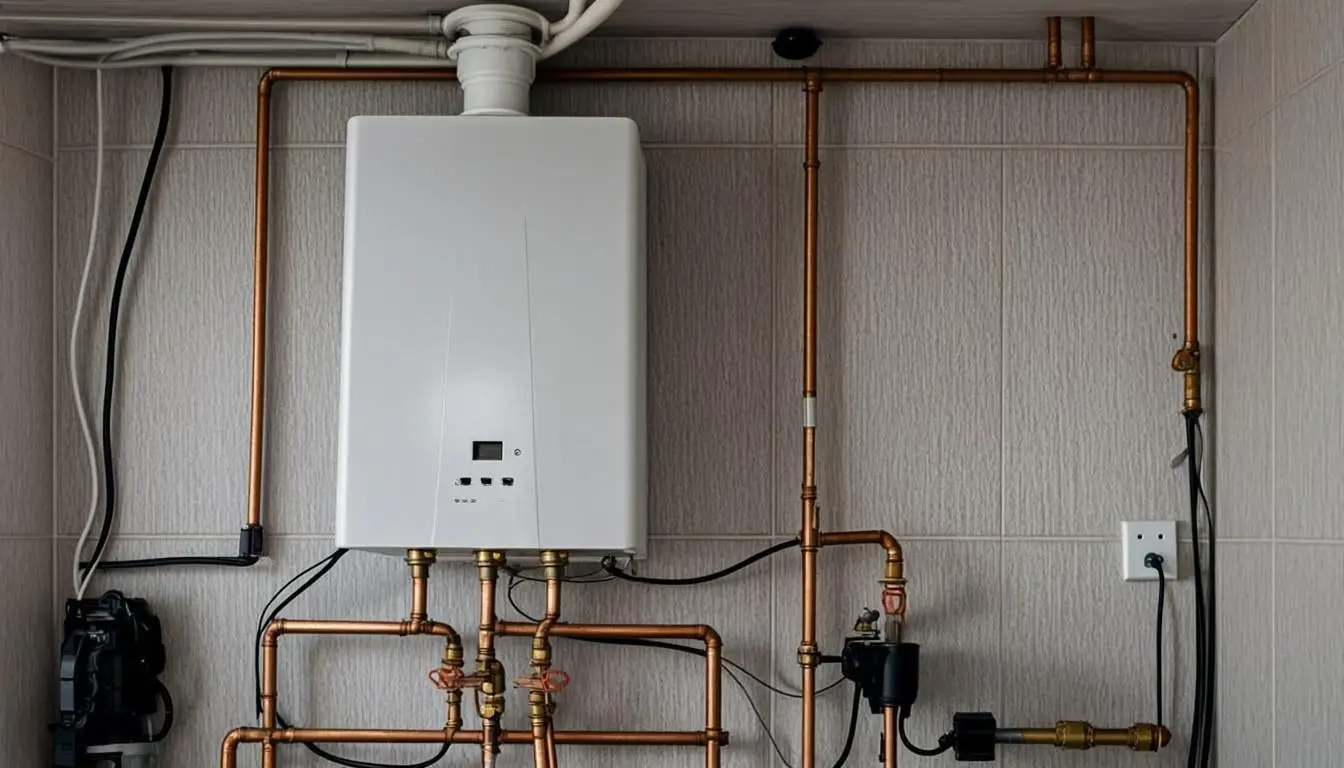
The Honest Answer Up Front
The numbers first: a 40-gallon atmospheric tank installed runs $1,900 to $2,800 in 2026, a 50-gallon $2,200 to $3,200, a 50-gallon power-vented unit $2,900 to $4,100, and a tankless conversion $3,900 to $6,200 with the gas work and venting the conversion demands. Electric tanks in condos run $1,600 to $2,400, and a heat pump water heater, the efficiency play with CleanBC money behind it, runs $3,400 to $4,800 before incentives. Every number includes the permit, the seismic strapping, a drain pan and the old tank hauled away, because in Richmond those are not upsells, they are the lawful shape of the job.
Richmond is the flattest, wettest big city in the region, sitting about a metre above sea level behind its dykes, and the housing it built for that reality changes water heater work three ways. There are no basements: slab-on-grade homes keep tanks in garages and utility closets, and garage installs of gas equipment sit on raised platforms per BC fire-safety practice, with the combustion air kept up off the floor. Flood-plain discipline is the culture here: pans under every tank, temperature-and-pressure relief piped to a place that can take forty gallons, and rough-ins that respect the flood construction levels Richmond enforces in low-lying areas. Our Richmond water heater crews install to that standard by default, and the Vancouver tank price guide shows how the numbers shift across the region.
The decision most Richmond households are actually sitting on is the rental tank: a monthly bill inherited from decades of BC rental culture, paid long past the point where owning would have been cheaper. The honest math is in the rental-versus-own section below, and the short version is that a tank bought at $2,200 to $3,200 typically beats a rental at Metro Vancouver rates inside six to eight years, and the tank is engineered for ten to twelve. Whether you keep the tank, go tankless with our Richmond tankless crews, or chase the heat pump water heater rebate, the sizing and flood-plain rules below apply to all of it.
$0-$0 tank installed
40-to-50-gallon gas tanks with permit, strapping, pan and haul-away included. The Richmond baseline.
$0-$0 tankless
Navien and Rinnai conversions with the gas sizing and venting done once, done right.
0 basements in Richmond
Slab-on-grade city: garage and closet installs, raised platforms, piped relief valves, pans everywhere. The install is the product.
What Water Heaters Cost in Richmond, By Type
Richmond pricing follows the region with one honest difference: the installation extras that other cities treat as options, pans, strapping, piped relief, platform work, are baked into the lawful job here, and a quote that omits them is a quote that will be corrected later. The table is our 2026 installed reality across the city, from Steveston to City Centre.
| Type | 2026 installed | Richmond notes |
|---|---|---|
| 40-gallon atmospheric gas | $1,900-$2,800 | Condo-townhouse and small-house workhorse; garage installs need the raised platform |
| 50-gallon atmospheric gas | $2,200-$3,200 | The family default; the tank most Richmond rentals are still billing monthly |
| 50-gallon power-vented | $2,900-$4,100 | Where B-vent will not work, tight utility rooms and sidewall terminations |
| Electric tank, 40-60 gallon | $1,600-$2,400 | Tower condos and townhouse rows on electric service |
| Tankless conversion | $3,900-$6,200 | Endless hot water, garage-wall mounted, gas upsizing usually required |
| Heat pump water heater | $3,400-$4,800 | The efficiency play; CleanBC and BC Hydro money applies before the price you pay |
| Expansion tank, on closed systems | $120-$220 | Required where a pressure-reducing valve closes the system, common in Richmond |
What is always inside those numbers: the plumbing permit and the Technical Safety BC gas filing on gas units, two seismic straps, a metal drain pan with its discharge piped somewhere safe, a new T-and-P relief valve, flex connectors, and the old tank drained, disconnected and recycled. What is never inside: a disposal fee surprise, a strapping surcharge, or the words per the technician's discretion. If a Richmond quote skips the pan or the straps, it is not a cheaper quote, it is a non-compliant one, and the wider plumbing price picture is in our plumber cost guide for comparison.
Why Elevation Rules Richmond Installs
Richmond sits on the Fraser delta, a metre above the river on average, protected by a dyke system, and the plumbing culture here is built around the fact that water goes flat when it escapes. A failed tank in a Vancouver basement floods a basement; a failed tank in a Richmond garage or utility closet spreads across a slab and into every room on it. That is why the pan is not optional, why the relief valve is piped to a location that can accept discharge, and why honest Richmond installers photograph the drainage path before the tank is set, not after.
The three flood-plain upgrades worth paying for
A properly piped drain pan, standard on our installs, that actually routes to a floor drain or the exterior rather than a pan that merely holds the first gallons. An automatic shutoff valve on the supply, $180 to $350, that closes when it senses a leak, which converts a slab flood into a puddle; on a finished slab floor with laminate or engineered hardwood, it is the cheapest insurance in the house. And a leak sensor under the pan, forty to ninety dollars, tied to a smart hub or a loud alarm, because the tank that fails at 2 p.m. is an inconvenience and the tank that fails during a weekend away is a restoration claim. The hidden leaks guide covers the slow-leak versions these catch.
Garage installs and the 18-inch rule
Gas water heaters in garages in British Columbia sit on a platform that lifts the burner at least 18 inches off the floor, a fire-safety practice that keeps the ignition source above heavier-than-air fuel vapours. In slab-on-grade Richmond, that means most garage tanks live on a concrete or steel stand, and it means the old three-legged tank you remember from a Burnaby basement does not transfer here. The platform is part of the install price on our quotes, and it is inspected as part of the permit, which is the quiet quality check most homeowners never realize they are getting.
The flood construction level rules add a layer on new construction and major renovations in designated areas: plumbing rough-ins and equipment need to respect the elevation the city requires, and a water heater replacement in a garage that floods with king tides, which some south Richmond and Steveston-adjacent properties know personally, is worth an honest conversation about location before the tank goes back in the same corner that flooded. The sump side of that vigilance is priced in the sump pump installation guide, and the Richmond plumbing crews have the location conversation on site, with the lot in front of us.
Tank or Tankless in a Richmond House
Richmond is genuinely tankless-friendly: the housing stock is newer than Vancouver's on average, the mechanical rooms are tight enough that a wall-hung unit is a real space win, and the gas infrastructure in the 1990s-forward subdivisions is sized for it with modest upsizing. The honest fit question is hot-water pattern, not real estate. Households with back-to-back showers and a dishwasher running at 8 a.m. get the full value of endless hot water; households with a soaker tub and simultaneous draws need the bigger-capacity units and honest winter-temperature math, because Metro Vancouver's incoming water in January is cold enough to shrink every tankless output rating in the province.
| The honest comparison | Tank | Tankless |
|---|---|---|
| Upfront, installed | $1,900-$3,200 | $3,900-$6,200 |
| Hot water capacity | 40-60 gallons, then recovery time | Endless, sized to the winter incoming temperature |
| Space in a Richmond garage or closet | Floor footprint plus platform | Wall-hung, frees the floor entirely |
| Service life | 10-12 years typical | 15-20 years with annual maintenance |
| Annual maintenance | Effectively none | Flush recommended, $150-$250, hard-water districts especially |
| Power outage behaviour | Gas tanks still deliver hot water | No power, no hot water, on most models |
The two cultures behind the tankless category are covered in our Navien versus Rinnai comparison, and the fuller decision tree lives in the tankless versus tank guide. Richmond-specific advice in one line: if the gas line to the house was sized in the tank era, the tankless quote must include the gas upsizing, and quotes that skip it are quoting the unit, not the job.
Sizing for Richmond Households
Sizing a tank is household arithmetic: count the simultaneous draws, size the first-hour rating above the worst hour of the morning. A two-bath house with a dishwasher lands on 50 gallons honestly, a one-bath townhouse on 40, and a three-bath house with a soaker tub is choosing between a 60-gallon tank, a 50-gallon high-recovery unit, or tankless done properly. Undersizing shows up as the second shower going lukewarm, oversizing shows up on the gas bill and in a tank that cycles less efficiently, and both are avoidable with ten minutes of questions at quote time.
The two-bath baseline
The Richmond default that works: a 50-gallon tank with a first-hour rating in the seventies, sized so two showers and a dishwasher can overlap without a negotiation. When the household adds a soaker tub, the first-hour math changes, because a soaker tub is a sixty-to-eighty-gallon draw arriving at once, and the honest answers are the bigger tank, the high-recovery unit, or the tankless that never runs out as long as the faucet is open. What never works is hoping, and what never works twice is undersizing to save three hundred dollars on a ten-year purchase.
Condo sizing, City Centre edition
The tower stock around Brighouse and the newer quads run smaller tanks, 30 to 40 gallons electric, and the sizing pressure is different: smaller households, but stacked schedules, everyone showering at 7 a.m., which is a recovery-rate problem more than a volume problem. Electric tanks recover slowly, so the high-recovery electric units or the next size up is usually the honest answer, and the strata rules on riser work matter more than the tank choice. The condo section below covers whose responsibility the riser side actually is.
For the heat pump water heater crowd, sizing is the same household arithmetic plus a placement question, because the unit needs air to make heat from, and a Richmond garage is a better home for one than a sealed interior closet. The heat pump water heater guide runs the full placement and operating math, and it is the fastest-growing category in our Richmond quote book.
Atmospheric, Power Vent and the Tight-Garage Problem
Venting is the line item that surprises Richmond quotes most often, because slab-on-grade homes put tanks in garages and utility rooms that were never generous with vent paths. An atmospheric tank needs a B-vent chimney run with code clearances; when the geometry will not cooperate, the power-vented unit solves it with a sidewall termination and a fan, at $700 to $1,200 more installed, and that difference is the single most common gap between a homeowner's remembered price and the actual quote. Tankless venting is its own category, concentric or dual-pipe PVC on condensing units, and it is usually easier than tank venting, not harder.
The honest sequencing at quote time: the estimator should look up before looking down, vent path first, tank location second, because the vent decides which equipment can even be considered. Richmond garages with finished ceilings and second-storey floors above them constrain everything, and the power-vent premium is cheaper than the framing conversation. The Richmond install crews photograph the vent path into every quote, so the number you see is the number the house can actually deliver.
Condos, Strata and the City Centre Towers
The tower districts from Brighouse to Oval Village run on electric tanks in individual suites, and the water heater conversation there is a strata conversation first. The tank inside the suite is usually the owner's; the risers, the building's recirculation system and anything inside a common shaft belong to the strata, and an install that touches the wrong side of that line without approval is an install that gets undone. Booked elevators, protected hallways and the building's quiet-hours rules are logistics we handle weekly across the City Centre buildings, and our quotes include the strata letter most property managers ask for.
Whose tank is it anyway
The rough BC rule: if you can touch it from inside your suite, it is probably yours; if it requires a common-area key, it is probably the strata's, and the bylaws settle the rest. Rental tanks in condos add a wrinkle, because the rental agreement travels with the equipment, and the buyout or return conversation belongs at the start of the project, not the end. The building's property manager is the fastest way to settle any of it, and asking them first costs nothing and saves a week.
For stacked-townhouse rows in East Richmond and the older Steveston-adjacent complexes, the pattern is closer to the detached-house math with strata paperwork attached, and gas units with sidewall power-venting are the common answer where the original B-vents have aged out. The plumbing program covers the full range of what we run in vertical Richmond, and the emergency side of a tank failure in a tower, where the pan and the shutoff matter most, is in our first sixty minutes guide.
The Rental Tank Question Richmond Asks Most
Metro Vancouver has one of the last thriving water heater rental cultures in Canada, and Richmond full of long-held family homes is deep in it: a tank installed in 2012 that has been billed monthly ever since. The rental pitch made sense once, no upfront cost, service included, and it still makes sense for some. The honest arithmetic, though, is unforgiving at current rates, and every household on a rental contract owes itself the table below at least once.
| The math over a 12-year tank life | Rental | Own |
|---|---|---|
| Monthly cost | Rental rate, ongoing | Nothing after purchase |
| Upfront | $0 | $2,200-$3,200 installed |
| Service and repair | Included | Parts warranty years 1-6 typical; labour on us year one |
| End of life | Tank stays theirs, rent stops when replaced | Tank is yours, recycled free at swap |
| Crossover point | Typically 6-8 years, then the rental is pure surplus | Everything after crossover is savings |
The decision is genuinely personal, cash-flow-first households are not wrong to rent, and the full analysis, including the buyout traps and what happens at tank end-of-life, is in our rental versus buy guide. What is not personal is the information: a rental statement shows the monthly number, a decade of statements shows what the tank actually cost, and most Richmond households that run that sum book a replacement swap. The Richmond crews handle the rental return paperwork on those swaps as part of the job.
Rebates: The Heat Pump Water Heater Layer
The rebate story for water heaters in 2026 concentrates on one category: heat pump water heaters, the electric units that move heat instead of making it, roughly two to three times more efficient than a standard electric tank. CleanBC and BC Hydro tracks have paid meaningful money on qualifying units, program terms move by year, and the honest approach is to confirm the current number at quote time rather than quote from a cached article. For gas tanks and tankless units, FortisBC program years come and go; the municipal rebates roundup tracks whether Richmond or any neighbour is topping up, and our quotes carry the paperwork either way.
The honest heat pump water heater math for a Richmond garage installation: the unit costs more, $3,400 to $4,800 installed, and consumes a fraction of the electricity of the tank it replaces, which on a house with an older electric tank can be hundreds of dollars a year, before any rebate. The placement rule is air volume, a garage gives it room to breathe, a closet suffocates it, and the dehumidification side-benefit is genuinely pleasant in a slab-on-grade house through a wet Richmond spring. The full guide runs the numbers with BC Hydro rates, and the category pairs naturally with the heat pump conversions happening across the city, covered in our wider energy upgrades guide.
Permits, Strapping and Install Day
A Richmond tank swap is a half-day job done properly: permit pulled, water and gas isolated, old tank drained and disconnected, platform checked, pan set and piped, new tank set and strapped top and bottom, T-and-P discharged, gas pressures verified on gas units, and the system filled, purged and brought to temperature before the tech cleans up. The commissioning is not a formality: temperature set to a safe, code-appropriate level, relief valve proven, combustion checked on gas units, and the homeowner walked through the shutoffs, the relight procedure and the pan drainage path. The permit gets inspected, and the inspection is your independent quality check, included in the price of doing it right.
What the permit actually buys you
A municipal plumbing permit and, on gas work, the Technical Safety BC filing, put the installation on the record, and that record is what your insurer asks about after a claim and what a buyer's inspector looks for at sale. Unpermitted tank swaps are the quiet liability of the second-hand market, and undoing one costs more than the permit ever did. Our quotes file both as a matter of course, and the water heater program runs the same standard across the region, from Richmond out to the valley.
Emergency swaps run the same playbook at short notice: a tank that lets go on a slab floor is a same-day call, the after-hours structure is the flat $150 premium and the $89 diagnostic credited toward the replacement, and the failure signs that predict the flood, rusty hot water, a pilot that will not hold, dampness at the base, are catalogued in the failure signs guide. Read it tonight if your tank is past ten, because the cheapest tank replacement in Richmond is still the one you schedule, and the winter prep checklist covers the seasonal checks around it. The after-hours side runs through our Richmond emergency line with the same flat structure all winter.
The Richmond Water Heater Cheat Sheet
The kitchen-table questions, answered the way the installer answers them in a slab-on-grade house.
| Question | The honest answer |
|---|---|
| What does a water heater cost in Richmond? | Tanks $1,900-$3,200 installed, power-vented $2,900-$4,100, electric $1,600-$2,400, tankless $3,900-$6,200, heat pump water heaters $3,400-$4,800 before rebates |
| Why do Richmond installs cost what they cost? | No basements: garage platforms, piped pans, seismic strapping and permits are the lawful shape of the job, not upsells |
| Tank or tankless? | Big simultaneous draws and tight mechanical rooms lean tankless; power-outage hot water and lowest upfront lean tank. Both are honest answers |
| What is the 18-inch rule? | Gas tanks in garages sit on a raised platform so the burner is above fuel vapours; standard on every garage install we do |
| Rental or own? | Rentals stop making sense at the 6-to-8-year crossover; run the table on your statement before renewing by inertia |
| Do rebates apply? | Heat pump water heaters carry the CleanBC and BC Hydro money; gas units depend on the program year. Confirm at quote, we file the paperwork |
| How long does a swap take? | Half a day: drained, swapped, strapped, panned, permitted, commissioned and walked through before cleanup |
| Strata tank in a tower, whose is it? | Inside your suite, usually yours; risers and common shafts, the strata's. Ask the property manager before anything else |
| Emergency replacement? | Same-day swaps with the flat $150 after-hours premium and $89 diagnostic credited; a tank weeping on a slab is a same-day call |
One line to keep: the install is the product in this city, pan, straps, platform, permit, and the number to call for it is 604-615-2212.
Get Your Richmond Water Heater Priced Flat-Rate
A free estimate covers type options, honest sizing for your household, the flood-plain extras done by default, and the rebate paperwork where it applies. Same-day emergency swaps available.
Frequently Asked Questions
Services From This Guide
Permitted, strapped, panned and commissioned: water heater installs and same-day swaps across Richmond, Steveston to City Centre.
Water Heaters Richmond
Tanks, power-vent and emergency swaps, flood-plain extras by default.
Tankless Richmond
Navien and Rinnai conversions with gas sizing done once.
Plumbing Richmond
The full plumbing side: repipes, shutoffs, sumps and risers.
24/7 Emergency
Failed-tank response with flat after-hours pricing posted in advance.
Related Guides

BC Home Service installs and services water heaters across twelve Metro Vancouver cities, with Richmond among the busiest: Red Seal certified, licensed gas fitters BC-PL-2019-4421, 12,000+ jobs since 2010. This guide is written from our Richmond install log, pan-and-strap discipline included, with the flat numbers we actually charge.
More about our team →Price Your Richmond Water Heater Today
A free estimate covers type options, honest sizing, the flood-plain extras by default, and the rebate paperwork where it applies. Written line-item pricing, zero obligation.
Tank past ten years old?
The failure signs, rusty hot water, a pilot that will not hold, damp at the base, are warnings you can act on. A scheduled swap beats a slab flood at 2 a.m., and the estimate is free.
Call 604-615-2212 WhatsApp Us