
The Honest Answer Up Front
A heat pump in BC Hydro territory saves real money, and the size of the saving is decided less by the equipment you buy than by what you heat with now. An electric-baseboard home that swaps to heat pumps can roughly cut its heating energy in half or better, because the same delivered heat that costs one kilowatt-hour from a baseboard costs about a third of one from a heat pump in our climate. A home heating with a modern high-efficiency furnace sees a much smaller running-cost difference and should be making a different decision for different reasons. The arithmetic fits on a napkin, and this guide is the napkin, worked line by line.
The second honest sentence is about what a savings estimate is allowed to look like. Any installer who promises "up to 50 percent off your bill" without asking what heats your house today, what rates you actually pay, and what the envelope looks like is not estimating, they are marketing. The real number comes from four inputs: your baseline fuel and its price, the seasonal efficiency of the proposed unit, the rate structure you sit inside, and the rebate stack, which in 2026 is worth more than most people expect. The heat pump installation page covers the equipment side; this guide is the money side, including the worked examples, the costs, the rebates and the ways the math gets lied about.
A savings estimate should survive being checked line by line at your own kitchen table. If it cannot, it was never an estimate, it was a sales pitch wearing one.
0 jobs since 2010
Enough conversions from baseboard, oil, furnace and AC baselines to know how each one actually lands on a bill.
0 in combined 2026 rebates
The ceiling of the CleanBC, BC Hydro, FortisBC and municipal stack on cold-climate heat pumps, paperwork completed by us.
0 star rated
26 verified Google reviews, including households we talked out of a conversion when the math did not support it.
0 on workmanship
Red Seal installers under BC licence BC-PL-2019-4421, flat-rate pricing, financing from 7.99 percent with approved credit.
The One Physics Fact Behind Every Dollar
Every savings dollar a BC heat pump produces comes from a single piece of physics: a heat pump moves heat rather than making it. Electric baseboard and strip heating convert electricity to heat at a ratio of exactly one to one, one kilowatt-hour in, one kilowatt-hour of heat out, and no machine in the world can beat that by conversion. A heat pump uses that kilowatt-hour to run a compressor that harvests heat from outdoor air, and in our climate it delivers roughly 2.5 to 3.5 kilowatt-hours of heat per kilowatt-hour consumed across a heating season. The ratio is the coefficient of performance, the COP, and it is the entire story of heat pump economics in one number.
The napkin math follows directly. If your home's winter heating currently costs a given amount on electricity at a COP of 1, the same delivered heat at a seasonal COP of 2.8 costs about 36 percent of that amount, a cut of nearly two-thirds. At a COP of 3.2 it costs about 31 percent. The ratio applies to the heating portion of your bill, not the whole bill, which is the first place honest estimates diverge from marketing ones: the fridge, the dryer and the lights keep costing what they cost.
| Seasonal COP | Heat per kWh consumed | Heating cost vs baseboard |
|---|---|---|
| 2.0 | 2.0 kWh | Half the cost, cut of 50 percent |
| 2.5 | 2.5 kWh | 40 percent of the cost, cut of 60 percent |
| 2.8 | 2.8 kWh | About 36 percent of the cost, cut of about 64 percent |
| 3.2 | 3.2 kWh | About 31 percent of the cost, cut of about 69 percent |
| 3.5 | 3.5 kWh | Below 30 percent of the cost, cut above 70 percent |
Two honest footnotes to the table. The COP falls as outdoor temperature falls, which is why a coastal season averages higher than an outflow-valley one, and why the seasonal average, not the plus-7 rating, is the number honest estimates use. And a gas furnace converts 80 to 98 percent of its fuel to heat, so comparing a heat pump to gas needs actual fuel prices, not efficiencies, which is a different napkin covered in Chapter 3.
What You Heat With Now Decides Most of It
The baseline is the biggest single input in the whole estimate, and it is the question our estimators ask first. Ranked from largest savings to smallest, the honest profiles look like this.
| Your current heating | What changes with a heat pump | The honest profile |
|---|---|---|
| Electric baseboard | Heating energy for identical warmth scales by the COP ratio | The largest cut available in this province, typically half or better, plus summer cooling that never existed |
| Oil heat | Fuel spend collapses, electric spend arrives at a fraction of it | Among the strongest cases, especially with the fuel-switching rebate tiers |
| Furnace plus aging central AC | Fuel shrinks to the coldest weeks, cooling efficiency jumps | Running-cost delta is modest in a cheap-gas year; comfort, carbon and AC replacement timing drive the decision |
| New high-efficiency gas furnace | Fuel swap at comparable running cost | The smallest running-cost story; decide on cooling, rebates and going gas-free, not on savings alone |
The baseboard home
Built electric in the seventies and eighties all over Burnaby, Coquitlam and Surrey, and the single best conversion candidate in BC. Our heat pump installs in Surrey skew this profile heavily.
The oil-heated home
Fuel oil pricing makes the arithmetic dramatic, and the fuel-switching rebate tiers were designed for exactly this house.
The furnace-and-AC home
The honest framing: you are replacing an aging AC anyway, and the heat pump is the furnace’s efficient partner. Judge it against the combined $3,800-$6,500 AC-replacement alternative plus fuel.
The new-gas home
If the furnace is under ten years and high-efficiency, running-cost savings alone will not carry the decision. Cooling, carbon and the fuel-switch question will.
The regional pattern behind those cards is consistent enough to plan around: electric-baseboard stock concentrates in the older cores of Burnaby and New Westminster, where our heat pump conversions run highest, while the valley and south-of-the-river suburbs carry the furnace-and-AC households making the pairing decision. Wherever you sit, the estimate should open with your baseline, stated in your own bills, before any equipment is discussed.
How the BC Hydro Rate Behaves
BC Hydro bills residential customers on a conservation rate: a daily threshold of consumption billed at a lower step, and everything above it billed at a higher one. The design is intentional, it rewards conservation, and it interacts with heat pump math in a way every estimate should disclose: a heat pump adds electrical load to your account, some of which lands above the step threshold at the higher rate, while removing the far larger resistance load that was already there for baseboard homes.
The honest treatment is marginal-rate arithmetic. For a baseboard home, the winter heating kilowatt-hours are already overwhelmingly in the upper step, so the heat pump's COP discount applies to exactly the expensive units, and the math is as favourable as the COP table says. For a gas-heated home adding a heat pump, the new electrical load is marginal at the top rate and buys fuel that is not burned, and the comparison runs on actual rates, not wishes. FortisBC gas-and-electric territory households run the same napkin with both utilities' numbers. None of this changes the physics; it changes which rate the savings get booked against, and it is why estimates made from "average rates" deserve skepticism.
| Rate situation | What it means for the math |
|---|---|
| Baseboard home, BC Hydro | Heating kWh already at the upper step; the COP discount lands on the expensive units. Strongest case |
| Gas home adding a heat pump | New electrical load at the marginal rate buys fuel not burned; comparison runs on actual rates |
| FortisBC dual-utility home | Both fuels priced in the napkin; fuel-switch tiers of the rebate stack may apply |
| Rates change over a decade | Payback should be quoted as a range, not a single number, and revisited when rates move |
One more sentence that earns its place: rates in this province have a history of moving, in both fuels, which is why a payback estimate quoted to the month deserves the same skepticism as a savings percentage quoted without a baseline. We give you the arithmetic page and the assumptions behind it, so when rates move, you can re-run your own numbers in ten minutes.

Four Worked Examples, Assumptions Shown
Four households, worked as arithmetic with every assumption visible, because example math is only honest when you can swap your own numbers in. The dollar inputs below are placeholders you replace with your own bills; the ratios are the physics.
| Scenario | Illustrative arithmetic | The honest caveat |
|---|---|---|
| Burnaby baseboard rancher, single storey | Heating electricity of, say, $300 a month in winter at the upper step, replaced by the same delivered heat at a seasonal COP of 2.8: about $107 | Your house, your baseline, your COP; the ratio, not the dollar figure, is the transferable part |
| Surrey gas home, furnace at 18 years, AC dying | A dual-track decision: heat pump pairing versus a new $3,800-$6,500 AC on the aging furnace | Running costs barely move in a cheap-gas year; comfort, carbon, AC timing and rebates decide |
| Abbotsford oil-heated home | Fuel spend collapses; electric spend arrives at the COP fraction of the old fuel bill | Outflow-exposure sizing matters; the fuel-switch rebate tiers are aimed at this house |
| Electric-heated condo, one or two rooms cold | Single or multi-zone ductless, $3,800-$5,500 installed, heats the rooms the baseboards under-serve | Per-room control removes the whole-home waste of heating everything to warm one room |
The first row is the one to internalize, because it is the region's most common conversion and the one with the least ambiguity: for identical delivered heat, cost scales by one over the COP, and no amount of rate complexity changes the direction of that arrow. The second row is the honest opposite, the household where the equipment decision is genuinely close and the money alone should not be allowed to decide it. If your situation is not on the table, the arithmetic page at estimate time is built for exactly your case, and it is the page we leave with you.
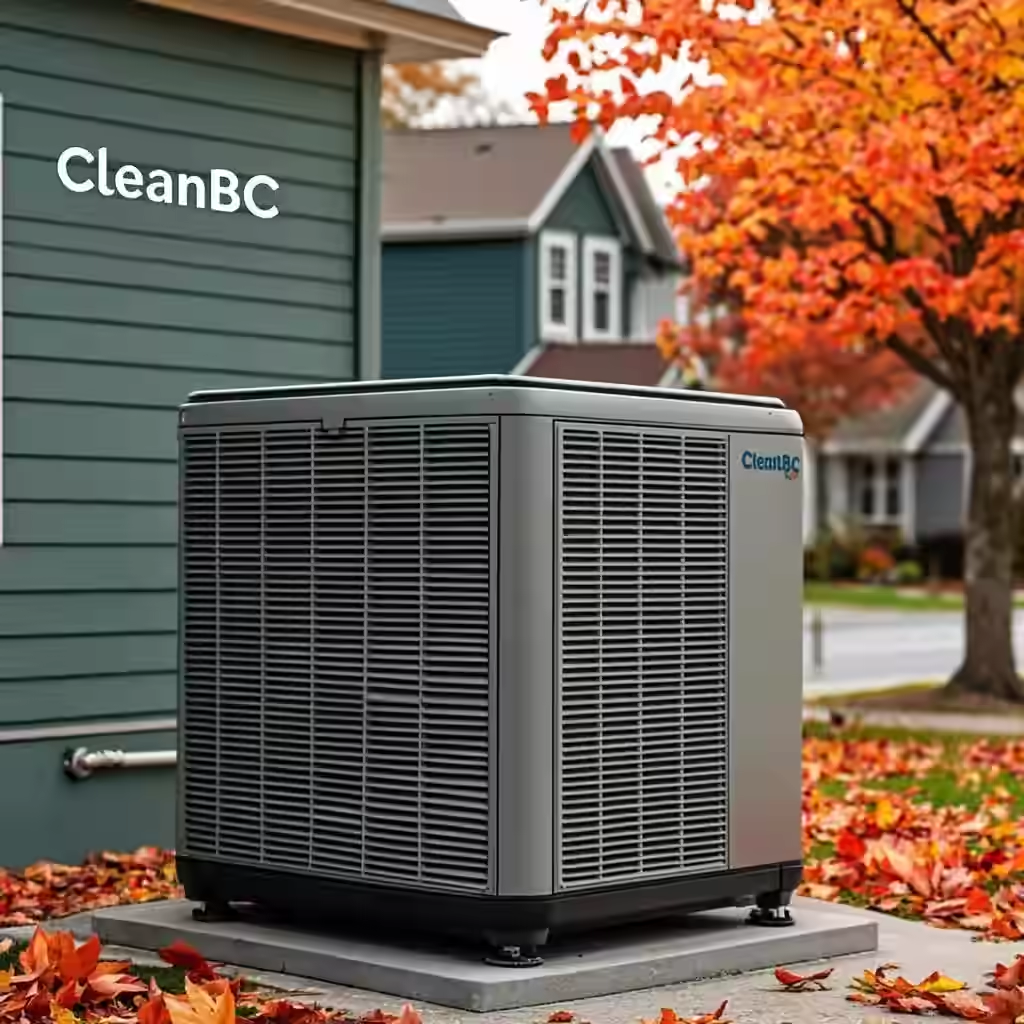
What the Switch Costs Installed
Savings arithmetic needs the capital side beside it, and our installed ranges for the region are these: single-zone and small ductless systems run $3,800-$5,500, cold-climate ducted systems run $6,500-$14,000, and multi-zone ductless installations covering a full house run $9,500-$16,000. Where a quote lands inside those ranges is a function of capacity, equipment tier, and the site's electrical and line-set work, which is why we measure before we price, and why flat-rate written quotes beat hourly surprises.
| Line item | Installed range | Notes |
|---|---|---|
| Ductless heat pump, single or small multi-zone | $3,800-$5,500 | The baseboard-conversion and condo path, per-zone control included |
| Cold-climate heat pump, ducted | $6,500-$14,000 | The whole-home path on existing ducts, winter-rated to -15°C and beyond |
| Multi-zone ductless, full house | $9,500-$16,000 | Homes without ducts, room-by-room comfort, one outdoor unit |
| Diagnostic visit | $89, credited to repair | Existing-unit troubleshooting, applied to the fix if you proceed |
| After-hours call | $150 flat premium | Posted in advance, no meter running, 24/7 dispatch |
Two running-cost footnotes belong beside the capital table. A heat pump needs an annual inspection the way any refrigerant system does, filter and coil care plus refrigerant and electrical verification, quoted flat when you book it. And the financing path exists precisely because the rebate cheques and the installation invoices travel on different calendars: financing from 7.99 percent with approved credit bridges that gap, and the financing and rebates page lays out the options side by side.
The Rebate Stack
Now the layer that reshapes the capital math, stated exactly. Combined CleanBC Better Homes, BC Hydro, FortisBC and municipal top-ups can reach $16,000 for cold-climate heat pumps in 2026 — we complete the paperwork. That sentence carries three facts worth unpacking: the stack combines provincial, utility and municipal programs; the ceiling applies to the cold-climate class, which is the class we install for heating-led conversions anyway; and the paperwork, historically the reason eligible households never claimed, is our job rather than yours.
The programs stack in layers. CleanBC Better Homes is the provincial backbone, with its strongest tiers generally reserved for households switching off fossil-fuel primary heating, which is why the oil and gas baselines from Chapter 3 matter beyond the fuel arithmetic. BC Hydro contributes top-ups for its electric customers, FortisBC runs its own programs for its territory, and a set of municipalities add local top-ups on top of the provincial layer, which is why two identical houses on opposite sides of a municipal boundary can see different ceilings. Eligibility gates matter: pre-approval before installation, listed equipment, and documentation that includes invoices, model numbers and commissioning details, which is why the paperwork discipline of your installer is a rebate variable as real as any dollar figure.
The honest caveats, because a rebate ceiling is not a promise: "can reach" is a maximum, individual households land lower depending on equipment, fuel baseline, utility territory and municipality, and program terms change through the year. We confirm your exact figure in writing at estimate time, file the pre-approval, and submit the claim. The CleanBC rebates guide decodes the program rules line by line, and the energy-efficient upgrades guide places the heat pump stack inside the wider set of upgrades that carry their own incentives.
Payback, Honestly Framed
Payback is net capital divided by annual savings, and the honest way to state it is as a range with the assumptions attached. The inputs you control or that your house hands you: the baseline fuel, the equipment path, the rebate stack, and the envelope work done before or alongside the conversion.
What shortens payback, in order of power: a baseboard or oil baseline, where the fuel arithmetic starts at its strongest; the rebate stack, which can move net capital by five figures in 2026; envelope work done first, because the cheapest kilowatt-hour is the one never bought; and a cold-climate tier that earns its premium across a long heating season. What lengthens it: a cheap-gas baseline, a full multi-zone build on a house that needed two zones, and mild-usage households whose winter bills were never large enough to convert quickly.
| Payback driver | Direction | Why |
|---|---|---|
| Baseboard or oil baseline | Shorter | The COP ratio and fuel pricing start at their strongest |
| Rebate stack in 2026 | Much shorter | Net capital drops by the combined programs, up to the $16,000 ceiling |
| Envelope work first | Shorter | Smaller equipment, smaller loads, and it helps every year after |
| Cheap-gas baseline | Longer | The fuel being replaced is already inexpensive per unit of heat |
| Rates moving over a decade | Both directions | Another reason the honest answer is a range, revisited as rates change |
The financing angle deserves its final word here: financing from 7.99 percent with approved credit converts a payback conversation into a monthly cash-flow conversation, and for baseboard households the monthly arithmetic can be close to neutral from the first winter, rebate cheque still to come. That is a decision about your balance sheet rather than the technology's, which is why we lay the financing page beside the arithmetic page rather than pretending one number fits everyone.
How We Build Your Real Number
The estimate is a visit, an arithmetic page and a review, and the sequence is short enough to print. It exists because the four inputs, baseline, efficiency, rates and rebates, are all household-specific, and because an estimate you can check is worth ten you cannot.
The visit and the baseline
A Red Seal estimator walks the house, runs the heat-loss arithmetic, and reads your actual bills with you: what heats the home today and what it costs.
The equipment path and its COP
The extended performance table of the specific proposed units, seasonal COP for your climate pocket, and the installed price in writing, flat-rate.
The rate and rebate page
The marginal-rate arithmetic for your utility and territory, and the rebate stack for your municipality, filed as pre-approval before any work starts.
The arithmetic page you keep
Baseline, projected, rebate, net capital, payback range, assumptions listed. Built to survive your own re-run when rates move.
The first-winter review
At the first annual visit we read the runtime and consumption data against the estimate, and adjust settings where the house disagreed with the assumptions.
That last step is the one that separates an estimate from a promise: the house gets a vote, the data gets read, and the arithmetic page you were handed gets marked against reality. It is also, quietly, how our conversion estimates keep their reputation, across the Surrey heat pump installations that skew baseboard-heavy and the furnace-pairing projects that skew valley-side.
The Ways the Math Gets Lied About
Every one of these appears in real quotes in this province, and every one is checkable with the arithmetic page from Chapter 9. Learn the pattern, and no pitch can blur it.
| The claim | How to spot the lie | The honest version |
|---|---|---|
| "Up to 50 percent off your BC Hydro bill" | The percentage is applied to the whole bill, not the heating portion | Heating energy scales by the COP ratio; the fridge and the dryer keep costing what they cost |
| Savings quoted at the plus-7°C COP | The rating point, not the seasonal average | Seasonal COP for your climate pocket, lower on paper and true in practice |
| "Baseboard comparison" shown for a gas home | The COP ratio silently applied to a gas baseline | Gas compares on fuel prices against actual rates, not on the electric ratio |
| Rebates quoted as guaranteed dollars | "Up to" quietly dropped, eligibility gates unmentioned | A written figure at estimate time, pre-approved, with the paperwork on us |
| Auxiliary heat and defrost omitted | Cold-snap hours missing from the model | Outflow-week behaviour modelled for valley addresses, in the assumptions line |
| A single payback number to the month | No range, no rate-change sensitivity | A range with assumptions, re-runnable when rates move |
The common thread is precision borrowed from somewhere it does not apply: a rating point standing in for a season, a whole bill standing in for heating, a ceiling standing in for a cheque. The defense is always the same document, the arithmetic page with your numbers on it, and a willingness to ask any bidder for theirs. We have walked away from more work than we care to count by asking that question politely, and the households we walked away for remember it longer than the ones we won.
The One-Page Cheat Sheet
The whole money file on one card. If a quote contradicts a line here, the quote needs to explain itself, and 604-615-2212 reaches someone who can.
| Question | The answer |
|---|---|
| What decides my savings? | Your baseline fuel first, equipment second, rates third, rebates fourth. In that order |
| Baseboard conversion math | Heating energy scales by one over the seasonal COP, roughly 2.5-3.5 here: a cut of half or better for identical heat |
| Gas home math | Runs on actual fuel prices, not the COP ratio; comfort, carbon and AC timing usually decide it |
| Installed costs | Ductless $3,800-$5,500, cold-climate ducted $6,500-$14,000, multi-zone $9,500-$16,000, flat-rate, in writing |
| Rebates in 2026? | Combined CleanBC, BC Hydro, FortisBC and municipal top-ups can reach $16,000 on cold-climate heat pumps, paperwork completed by us |
| Rate structure? | Conservation-rate steps; the COP discount lands on the marginal kilowatt-hours, disclosed in the estimate |
| Payback? | A range, not a month: net capital after rebates over annual savings, shortest for baseboard and oil homes |
| Financing? | From 7.99 percent with approved credit, bridging the gap between install invoices and rebate cheques |
| How we estimate? | Baseline bills, seasonal COP, marginal rates, rebate pre-approval, arithmetic page you keep, first-winter data review |
Frequently Asked Questions
Services From This Guide
Heat pump conversions across Metro Vancouver with the arithmetic shown, rebates pre-approved and filed, flat-rate pricing and the 2-year workmanship warranty behind the work.
Heat pump installation
Cold-climate and ductless conversions with rebate pre-approval filed and the arithmetic page left with you.
Financing and rebates
Financing from 7.99 percent with approved credit, bridging install invoices and rebate cheques.
Heat pumps in Burnaby
Baseboard-conversion country: the strongest savings arithmetic in the region, measured house by house. For the full BC price breakdown, see Heat Pump Cost in BC (2026): Prices, Rebates and Real Totals.
24/7 emergency service
No-heat calls answered around the clock, average 45-minute response, $150 flat after hours. We cover this in detail in Heat Pump Auxiliary Heat Strips Explained for BC. For a neighbourhood-level look at this, Vancouver Multiplex Program: Why Heat Pumps Win is the local deep dive.
Related Guides
CleanBC Rebates: The 2026 Guide
The program stack decoded line by line: tiers, eligibility gates and the paperwork that wins claims. What you actually pay is broken down in Geothermal vs Air-Source Heat Pumps in BC: Costs and Payback. If you are troubleshooting this right now, Heat Pump Noise Levels: Decibels, Neighbours, BC Bylaws maps the causes and fixes.
EfficiencyEnergy-Efficient Upgrades in BC
The wider upgrade map, envelope first, and where a heat pump sits in the order of operations. The brand-by-brand breakdown lives in Electric Furnace vs Heat Pump in BC: 2026 Verdict. We cover this in detail in HSPF and COP Explained: Heat Pump Efficiency for BC Winters.
Heat PumpsThe Vancouver Heat Pump Guide
The equipment and sizing context behind every savings estimate in this guide.

Red Seal certified, licensed gas fitters (BC-PL-2019-4421), $2M insured and 15-plus years in the field, with more than 12,000 jobs completed across Metro Vancouver since 2010 and a 5.0-star rating across 26 Google reviews. We wrote this guide because a savings estimate should survive being checked line by line at the kitchen table, and because the households who can re-run their own arithmetic are the households no sales pitch can mislead. Real BC numbers for this live in Cold-Climate Heat Pump Cost in BC (2026): The Real Numbers. To book instead of DIY, see heat pump repair in Langley — same-day across the city. Related reading: Where to Put a Heat Pump Outdoor Unit in BC: Snow,.
More about our team →Get Your Real Savings Number
Book a $89 diagnostic or a free conversion estimate with a Red Seal estimator. You get the baseline read on your own bills, the seasonal COP of the exact models proposed, the rebate stack for your utility and municipality in writing, a fixed flat-rate price, and financing options from 7.99 percent with approved credit. Zero obligation, same-day quotes on most calls. For a side-by-side comparison, see Best Heat Pump Brands for BC Weather (2026). If you would rather hand this to a pro, our heat pump services pages cover Metro Vancouver. The brand-by-brand breakdown lives in Heat Pump vs Furnace: The Decision Guide for BC.
No heat right now?
Conversion questions can wait a day; no-heat calls cannot. We answer 24/7 with live dispatch and an average 45-minute response, a $150 flat after-hours premium posted in advance, and the $89 daytime diagnostic credited to any repair.
Call 604-615-2212 WhatsApp Us